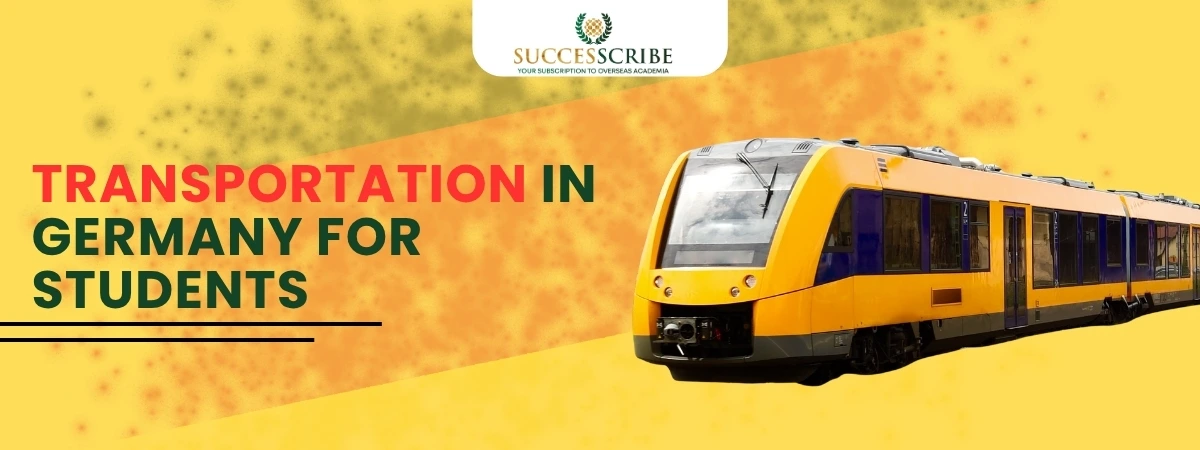
The absolute cornerstone of transportation in germany for students is the semester travel pass. Historically, each university negotiated its own regional transit zone, meaning a student in Cologne couldn’t use their pass in Berlin or Munich.
Thankfully, the introduction of the nationwide Deutschland ticket for students germany program (officially known as the Deutschlandsemesterticket) changed everything.
Key Highlights: Transportation in Germany for Students
- What is the Deutschlandsemesterticket?
- Train and Transit Categories Covered by Your Pass
- Embracing the Bike Culture in Germany for Students
- Alternative Options: Long-Distance Travel for Students
- Crucial Mistakes to Avoid
What is the Deutschlandsemesterticket?
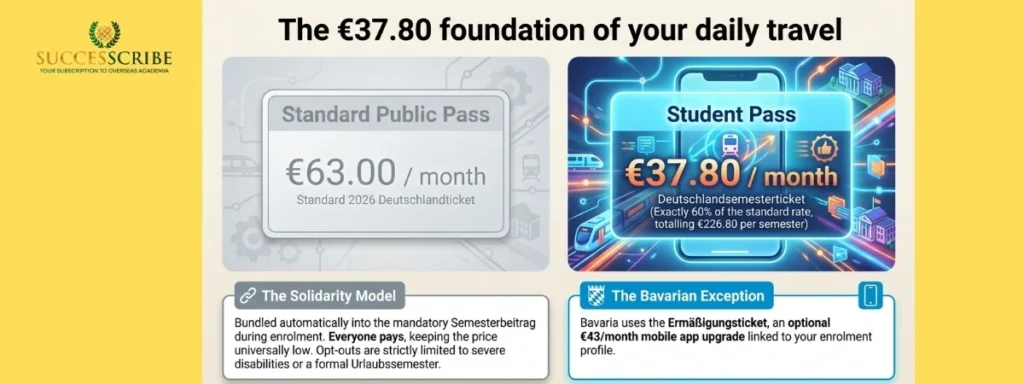
The Deutschland ticket for students germany is a nationwide student travel pass germany framework that allows enrolled students to access unlimited local and regional public transit across the entire country. Compared to other European countries, the system of transportation in germany for students offers unmatched nationwide value. Instead of paying the standard 2026 public rate of €63 per month for the standard Deutschlandticket, students receive a heavily subsidized rate.
- The 2026 Pricing: The student ticket is priced at exactly 60% of the standard consumer rate. With the general Deutschlandticket priced at €63 per month in 2026, the Deutschland ticket for students germany costs €37.80 per month (totaling €226.80 per semester).
- Payment Method: You do not buy this monthly. The fee is automatically bundled into your mandatory Semesterbeitrag (semester contribution) paid during enrollment or re-registration.
- The Solidarity Model: This is a compulsory framework. Every student at a participating university pays for it, which keeps the price low for everyone. You cannot opt out unless you have specific severe disabilities or are taking a formal leave of absence (Urlaubssemester).
Suggested Post: Sample SOP for Germany student visa
State-Specific Variations (e.g., Bavaria)
While most public universities across Germany have adopted the standardized €37.80/month digital ticket framework, a few states utilize a separate mechanism. For instance, Bavaria offers a dedicated student travel pass germany program called the Ermäßigungsticket (Discount Ticket) for €43 per month, which functions identically but is purchased as an optional mobile app upgrade linked to your enrollment profile.
Train and Transit Categories Covered by Your Pass
Understanding how to use public transport in Germany networks requires knowing exactly what your student travel pass Germany covers – nd what it strictly forbids. Fortunately, the overall cost of transportation in germany for students is heavily subsidized by mandatory semester contributions.
| Transit Type | German Name | Included in Student Pass? | Best Used For |
| U-Bahn | Untergrundbahn | Yes (Unlimited) | Rapid inner-city underground transit in major metros. |
| S-Bahn | Stadtschnellbahn | Yes (Unlimited) | Suburban rail connecting cities to surrounding towns. |
| Tram / Straßenbahn | Tram / Straßenbahn | Yes (Unlimited) | Street-level rail common in both large and mid-sized cities. |
| City Bus | Linienbus | Yes (Unlimited) | Extensive local street networks and night buses. |
| Regional Trains | Regional-Express (RE) / Regionalbahn (RB) | Yes (Unlimited) | Travelling between different cities within or across state lines. |
| Intercity Express | ICE | NO | High-speed long-distance travel (Requires separate ticket). |
| Intercity / Eurocity | IC / EC | NO | Standard long-distance domestic/European lines. |
| Private Long-Distance | FlixBus / FlixTrain | NO | Budget private long-distance alternatives. |
Critical Rule for Long-Distance Travel: If you board an ICE, IC, or EC train with only your student Deutschlandticket, you will be flagged for fare evasion (Schwarzfahren). These high-speed trains require individual tickets purchased directly via the Deutsche Bahn (DB) Navigator app or website.
Suggested Post: Masters in Data Science in Germany
Step-by-Step: How to Use Public Transport in Germany
Once your semester fee is paid, you must know how to properly access and use the transit networks. The physical paper student ID card is no longer valid as a transit pass on its own in most parts of Germany.
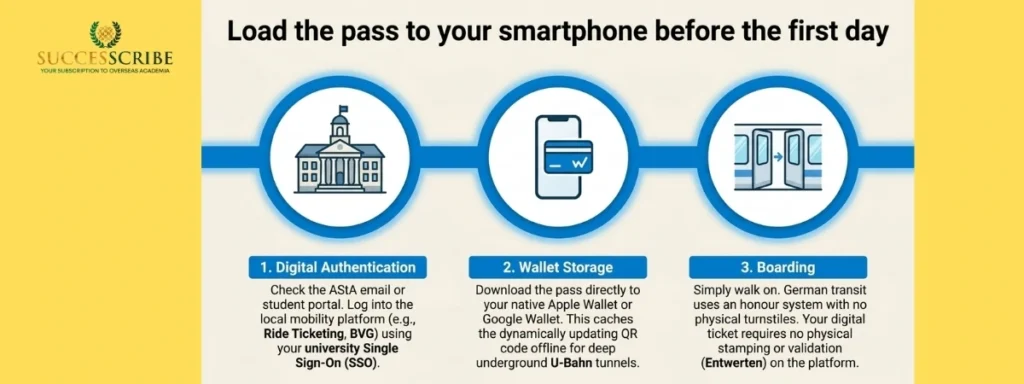
Step 1: Digital Activation
Your student travel pass germany must be retrieved digitally before the first day of the semester.
- Log into your university’s student portal or check the email instructions sent by the AStA (General Students’ Committee).
- You will be redirected to a dedicated mobility platform (such as Ride Ticketing or the local city transit app like BVG in Berlin or hvv Switch in Hamburg).
- Authenticate using your university single sign-on (SSO) credentials.
- Load the digital ticket directly into your Apple Wallet or Google Wallet. The pass features a live dynamically updating QR code.
Step 2: Boarding and Validating
Understanding how to use public transport germany platforms relies heavily on the “honor system,” backed up by plainclothes ticket inspectors.
- No Turnstiles: German train and subway stations do not have physical barriers or turnstiles. You simply walk onto the platform and board the train.
- Validation (Entwerten): If you ever purchase a physical single-use or day ticket from a platform vending machine, you must insert it into the small red or yellow stamping boxes on the platform before boarding. Skipping this step makes your ticket legally invalid. For your digital student ticket, no validation stamping is required.
Step 3: Surviving a Ticket Inspection
Ticket checks happen randomly. Inspectors wear plain civilian clothes and will suddenly pull out a digital scanner, announcing “Die Fahrausweise, bitte” (Tickets, please).
- You must present the digital QR code from your smartphone wallet.
- You must present a valid, official photo ID (Passport, National ID card, or a European residence permit card). A student card without an official photo ID is legally insufficient.
Embracing the Bike Culture in Germany for Students
Beyond buses and trains, the absolute cheapest, healthiest, and most culturally authentic way to navigate your university town is on two wheels. The bike culture in germany for students is deeply institutionalized, with cities optimized completely for cyclists.
Suggested Post:
Why Cycling is King
Almost every German city features dedicated bike lanes (Radwege), separate bicycle traffic signals, and massive bike parking areas at transit hubs. Choosing to participate in the bike culture in germany for students saves massive amounts of time on short commutes, bypasses late-night transit schedules, and keeps your monthly living costs near zero.
Sourcing a Bicycle on a Budget
You do not need to buy a brand-new, expensive bicycle. In fact, older, unassuming bikes (affectionately called Drahtesel or “wire donkeys”) are preferred because they are less prone to theft.
- Used Bike Markets (Fahrradflohmarkt): Held monthly in most student towns. You can pick up a fully legal, working second-hand bike for €50 to €120.
- Online Platforms: Check Kleinanzeigen (Germany’s local classifieds platform) or student Facebook/Telegram groups.
- Bike Subscriptions (Swapfiets): Hugely popular in the bike culture in germany for students. For roughly €16.90 to €19.90 a month, you get a recognizable blue-front-tire bicycle. If it breaks down, they repair or swap it for free within 24 hours.
- University Bike Cooperatives: Many student unions fund self-help workshops (Fahrrad-Selbsthilfewerkstatt). You pay a tiny fee (or it’s covered by your semester mobility fund) to use their tools and get free guidance on fixing your own bike.
Rules of the Road You Cannot Ignore
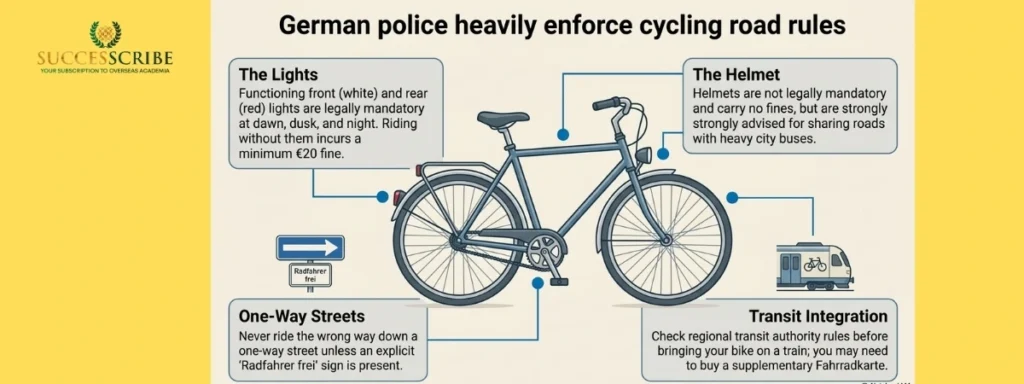
German police heavily enforce cycling laws, and fines can be steep for students on tight budgets.
- Lights are Mandatory: Your bike must have functioning front (white) and rear (red) lights during dawn, dusk, and nighttime. Riding without lights carries a minimum €20 fine.
- One-Way Streets: You cannot ride the wrong way down a one-way street unless it explicitly features a sign stating Radfahrer frei (Cyclists allowed).
- Bicycles on Public Transit: Can you take your bike on the train? It depends. With a student pass, some regions allow free bike transit during off-peak hours, while others require you to purchase a separate supplementary Fahrradkarte (Bike ticket). Check your local transit authority (e.g., MVV, VBB, KVB) website for exact regional windows.
Suggested Post: Sample SOP for MBA in Germany
Alternative Options: Long-Distance Travel for Students
When you want to travel across Europe or visit long-distance destinations within Germany that would take too long on slow regional trains, you have plenty of budget alternatives.
Deutsche Bahn BahnCard
If you frequently travel long distances via high-speed ICE trains, investing in a BahnCard is essential.
- BahnCard 25: Gives you a 25% discount on all saver and flexible fares.
- BahnCard 50: Gives you a 50% discount on flexible fares and 25% off saver fares.
- My BahnCard: A highly discounted version specifically for young adults and students under the age of 27. It typically costs less than €15 to €35 per year and pays for itself within a single long-distance round trip.
Long-Distance Intercity Buses (FlixBus)
For ultra-budget long-distance travel, FlixBus and FlixTrain connect almost every major European and German city. While slower than the high-speed ICE, it is frequently a fraction of the cost, often offering cross-country journeys starting at just €10 to €15.
Crucial Mistakes to Avoid
To ensure your experience with transportation in germany for students remains stress-free, steer clear of these common student pitfalls:
- Forgetting to Cancel Optional Subscriptions: If you purchase an external, non-university Deutschlandticket upgrade or a bike subscription, remember that most German transit products operate on a strict monthly subscription (Abo) model. You must cancel before the 10th of the current month if you want to stop it for the upcoming month.
- Assuming Your Phone Battery Will Last: If your phone dies and you cannot present your digital student travel pass germany, inspectors will treat you as a fare evader. While you can reduce the €60 fine to a €5 administrative fee by presenting your valid digital pass at a customer center later, it is an administrative headache best avoided by carrying a small power bank.
- Ignoring Quiet Zones on Long-Distance Trains: If you take an ICE train, check the windows for icons denoting the Ruhebereich (Quiet Zone). Phone conversations, loud music, or rowdy group chats will quickly earn you firm reprimands from fellow passengers and train conductors alike.
By mastering the Deutschland ticket for students germany registration, learning how to use public transport germany parameters correctly, and integrating smoothly into the thriving bike culture in germany for students, you will easily unlock cheap, efficient, and boundless travel options throughout your entire academic journey in Germany.
Conclusion
To navigate transportation in Germany for students successfully in 2026, use these simple tips. The system is designed to be student-friendly and offers exceptional value. The Deutschlandticket for students Germany is your best ally for daily commutes and regional adventures, while the My BahnCard is your tool for long-distance journeys.
By embracing the bike culture in Germany for students, you’ll experience the country like a local – efficiently, healthily, and sustainably. A combination of regional trains, city bikes, and a bit of planning will ensure you can make the most of your study time in Germany.
FAQs
Question. Can I travel to neighboring countries using the Deutschlandsemesterticket?
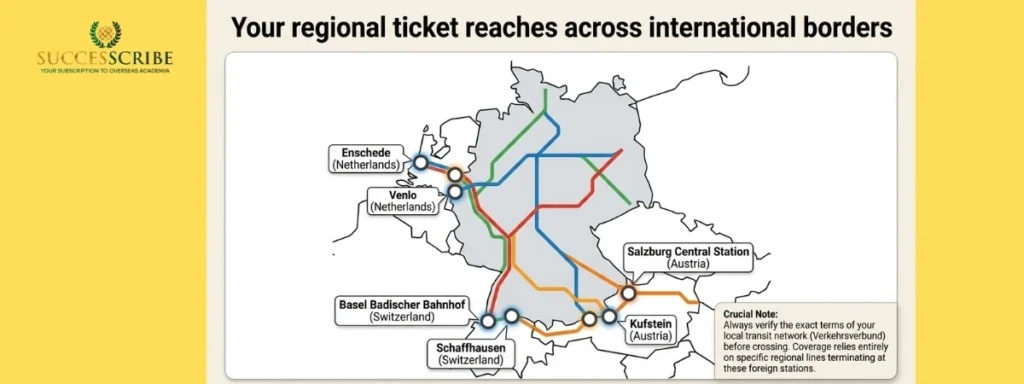
Answer. Generally, no, but there are a few border exceptions. Your student travel pass germany is strictly meant for domestic public transit. However, because certain German regional train lines terminate just across the border, you can use your ticket to travel to specific frontier stations in neighboring countries without paying extra.
Common included border routes feature:
Austria: Salzburg Central Station and Kufstein
Switzerland: Basel Badischer Bahnhof and Schaffhausen
Netherlands: Enschede and Venlo
Always verify the exact terms of your local transit network (Verkehrsverbund) before crossing borders to ensure your specific regional line is fully covered.
Question. What happens if I am caught on a train without a valid ticket?
Answer. If you fail to present a valid digital QR code or your stamped paper single ticket during an inspection, you will be flagged for fare evasion (Schwarzfahren).
The Standard Penalty: You will be issued a strict €60 fine on the spot.
The Student Exception: If you actually own a valid Deutschland ticket for students germany but your phone died, or you forgot your physical ID, you can visit the local transit authority’s customer center within 14 days. Present your active pass alongside your official ID, and they will reduce your fine to a minor €5 to €7 administrative fee.
Question. Can I bring a friend or a dog with me on my student travel pass?
Answer. No. Unlike some premium commercial transit subscriptions in Germany that allow you to bring a companion on weekends or after 7:00 PM, the student travel pass germany framework is strictly personalized and non-transferable.
Friends: Your friends must buy their own individual tickets.
Dogs: Rules vary by region. In some transit networks (like Berlin’s VBB), a small dog or even one large dog can accompany you for free. In other networks, you are required to purchase a reduced-fare single ticket or a specialized dog day pass.
Question. Do I need to wear a helmet while participating in the bike culture in Germany for students?
Answer. Legally, no; culturally, it is highly encouraged. There is currently no law in Germany making bicycle helmets mandatory for adults or students. You will not face legal penalties or police fines for riding bareheaded. However, safely participating in the bike culture in germany for students means sharing roads with fast-moving cars and heavy city buses. Wearing a helmet is strongly advised for personal safety, especially during rainy autumn days or icy winter mornings.
Question. What should I do if my digital student ticket app glitched during an inspection?
Answer. If a regional transport app crashes or refuses to load your QR code right when an inspector stands in front of you, don’t panic.
1. Be polite and transparent: Show the inspector that your app is loading or encountering a network error
2. Use offline wallets: To prevent this issue entirely, always download your Deutschland ticket for students germany directly into your phone’s native Apple Wallet or Google Wallet. These native smartphone wallets cache the active QR code offline, allowing you to pull it up instantly even when you have completely lost mobile reception inside a deep underground U-Bahn tunnel.
Related Post
Indian food and culture in Germany
Student accommodation in Germany
German spouse visa for Indian students
Germany Blue Card for Indian professionals