Tokyo is a city very well connected and full of opportunities for students from around the world, but it is also one of the more costlier cities in Japan. Before deciding to move to Tokyo, students should know how much money they will need for rent, food, transport and daily essentials.
The living expenses in Tokyo for students can be very different depending on where you live and how you handle your spending. A student living in a university dormitory may have a different budget, from someone renting a private apartment. Similarly cooking at home and using public transport regularly can keep living expenses under control.
For students, knowing the expected living costs in Tokyo is useful when they add up the total cost of studying in Japan. This post breaks down the monthly expenses, explains the costs in Indian rupees, compares Tokyo with other Japanese cities and gives practical tips to cut spending while studying.
Why Study in Japan?
Japan has become an interesting choice for international students who wish to study in a country famous for technology, research and a well organised education system. It also gives a different academic and cultural experience, compared to studying in India.
Tokyo, in particular, has an advantage because students are surrounded by universities, research centres, multinational companies and industries that range from technology and finance, to manufacturing and media.
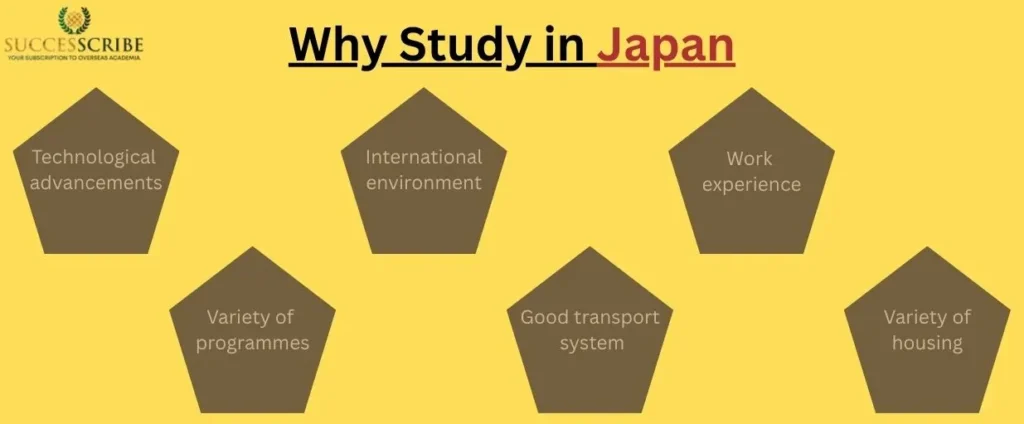
The following are some of the reasons students consider Japan for higher education:
- Technological advancements: Japan is well established in areas like robotics, artificial intelligence, electronics, automotive engineering and technology.
- Variety of programmes: Courses include business studies, engineering, computer science, design, sciences, healthcare and many more.
- International environment: Studying in Japan exposes students to Japanese culture alongside individuals from all over the world.
- Good transport system: The availability of many trains and metro rail systems makes commuting to university quite easy.
- Work experience: Tokyo is one of Japan’s main cities for business, allowing students access to many companies from various sectors.
- Variety of housing: University housing, shared houses and apartments are among the options available for students to choose from.
Although Tokyo is among the best cities globally, it is not enough reason for choosing Tokyo just because of its reputation as an international city. There are various other things which need to be considered including tuition fees, accommodation costs and travel expenses.
Living Expenses in Tokyo for Students Per Month
The living expenses in Tokyo for students per month can vary considerably depending on where a student lives and how they spend their money. Expenses such as accommodation will always be the most expensive in Tokyo. The living expenses of students living in dormitories and shared accommodation will be lower compared to those who rent their own rooms in the middle of the city.
Students in general can anticipate that their living expenses in Tokyo will be between ¥110,000 and ¥180,000 in a month without considering the tuition fees. This is not necessarily a requirement but a planning range for the students.
The following will give a rough estimate of the budget plan of a student:
| Expense | Approx. Monthly Cost |
| Accommodation | ¥40,000 – ¥100,000+ |
| Food and groceries | ¥30,000 – ¥60,000 |
| Transportation | ¥5,000 – ¥15,000 |
| Utilities | ¥8,000–¥15,000 |
| Mobile and internet | ¥3,000–¥8,000 |
| Personal expenses | ¥10,000–¥25,000 |
| Estimated total | ¥110,000–¥180,000+ |
These figures should be treated as a starting point for budgeting. Your actual living expenses may be lower or higher depending on your accommodation, university location and lifestyle.
Accommodation Costs in Tokyo for Students
Accommodation deserves attention because it can take up the largest share of a student’s monthly budget.
International students generally have three common choices: university or private student dormitories, shared accommodation and private apartments.
| Accommodation Type | What Students Can Expect |
| University dormitory | Lower rent and student-oriented facilities |
| Shared house/apartment | Rent and some facilities shared with other residents |
| Private apartment | Greater privacy but higher overall cost |
Japan’s official Study in Japan portal reports an average monthly rent of around ¥57,000 for international students in Tokyo, based on the JASSO survey cited by the portal. The same source notes that rent varies according to factors such as location and the type of accommodation.
Private apartments can cost considerably more. The University of Tokyo, for example, estimates that a small one-room apartment for a single person may cost around ¥80,000–¥100,000 per month.
Students should also remember that renting a private apartment may require money upfront. Depending on the property, there can be costs such as:
- Security deposit
- Key money
- Rental agency fees
- Initial rent
- Furniture and appliances
- Utility setup
- Insurance or other contract-related charges
This is why a cheaper-looking monthly rent does not always mean the cheapest accommodation overall. For students trying to control the living expenses in Tokyo, university dormitories and shared accommodation can be worth considering, particularly during the first year.
Food and Grocery Costs in Tokyo
Food is another major part of the monthly budget, but it is also one of the expenses students can control. The students who often cook their meals will be able to control their expenditures on food better than those who often eat out or buy meals at the grocery store every day.
The proper estimate for spending on food would be approximately ¥30,000-60,000 per month.It depends on the personal eating preferences. For example, one student can cook breakfast and dinner and buy lunch at the university, while the other one orders food during the week.
The Indian students will also see a difference when purchasing the items that they use. The Japanese grocery stores are good to buy ordinary foods, but it will take extra money to find the usual Indian food there due to import taxes.
A few simple ways to manage food expenses include:
- Purchase food from supermarkets and not from convenience stores.
- Prepare larger portions of food which can be used in multiple meals.
- Look for differences in prices in different supermarkets.
- Make use of university cafeterias if the meals there are affordable.
- Buy seasonal produce of fruits and vegetables.
- Making dining out and food delivery costs occasional expenses.
Transportation Costs in Tokyo
Transportation plays a major role in the life of students in Tokyo since many students travel using trains or subways to their respective universities.
The cost will greatly depend on the distance between your university and the place where you’re staying. A student living within walking and cycling distance can save a lot more than another who travels through the city every day.
For budgeting purposes, students can keep around ¥5,000–¥15,000 per month for regular transportation, although the actual amount will depend on the route and frequency of travel. There is an important connection between accommodation and transport costs. Choosing a cheaper apartment far from your university may reduce your rent but increase your commuting expenses.
Therefore, when comparing accommodation, look at:
Monthly rent + transportation + commuting time, rather than looking at rent alone.
Living Expenses in Japan in Indian Rupees
Indian students often find it easier to understand the cost of studying abroad when Japanese yen figures are converted into Indian rupees. As exchange rates keep fluctuating, the INR equivalent should be used only as an approximate planning figure.
For example, if ¥1 is approximately ₹0.61, the monthly budgets would look roughly like this:
| Monthly Budget in Japan | Approx. Cost in INR |
| ¥100,000 | ₹61,000 |
| ¥110,000 | ₹67,100 |
| ¥130,000 | ₹79,300 |
| ¥150,000 | ₹91,500 |
| ¥180,000 | ₹1,09,800 |
This means an Indian student planning the living expenses in Japan in Indian rupees could consider roughly ₹67,000 – ₹1.10 lakh per month as a broad Tokyo living-cost range, excluding tuition.
However, students should not treat this as a fixed monthly bill. A person residing in the dormitory and preparing most of their food may spend less money, whereas a person residing outside the dormitory in the city and eating out often will spend more.
It is also important to distinguish Tokyo from Japan as a whole. The national average living cost for international students is lower than the typical budget needed in Tokyo, particularly because accommodation costs vary significantly between regions.
How Indian Students Can Reduce Living Expenses in Tokyo

While Tokyo may be expensive, there are some ways for students to stretch their budget. One can save money on housing and personal habits rather than trying to save every cent by eliminating small expenditures.
- Use student housing: Dorms and residences of the university can be considered, as they may cost less and involve less initial costs than a private apartment.
- Use shared housing: Sharing an apartment or a house can help reduce the cost of rent and sometimes even utilities and the internet connection.
- Live slightly farther from the city center: One does not have to be located in the central part of the city, as one can find a place that offers good train connections at a cheaper price easily.
- Cook regularly: Eating outside on a daily basis can be quite costly. When you cook your own food, you can manage your expenses without any problem. You can also buy grocery in bulk quantities and prepare food in larger portions as well. Eating out is not bad, but just don’t do it regularly.
- Think about your commuting process: Before signing an agreement, make sure to find out the time it takes you to reach the university. An apartment which looks cheap due to its low rent price might end up being costly because of the commuting time. Consider the costs always.
- Monitor smaller expenses: Items such as coffee, food from convenience stores, delivery costs and even subscription and entertainment costs may not seem much, but they eventually add up. You might be surprised how much they take from your budget.
- Make a monthly yen budget: Once you arrive in Japan, try to set a monthly budget in yen. This helps you understand your spending better. Instead of converting every purchase into Indian rupees, think of it in yen. It makes money management simpler and keeps you on track.
Tokyo vs Other Japanese Cities: Where Is Cheaper for Students?
Tokyo is not the only city international students can consider in Japan. Osaka, Kyoto, Fukuoka, and Sapporo are other popular student cities where accommodation expenses may vary greatly.
According to the official study in Japan webpage, the average rent can change depending on the area . According to the data provided by the official portal, the average rent is about ¥57,000 per month in Tokyo but ¥40,000 in Kinki and ¥29,000 in Kyushu.
| City/Region | General Cost Situation |
| Tokyo | Higher accommodation and overall living costs |
| Osaka | Generally more affordable housing than central Tokyo |
| Kyoto | Costs vary depending on location and accommodation |
| Fukuoka | Often considered a more affordable major city |
| Sapporo | Lower rent in many areas, although winter heating can affect expenses |
This does not mean students should automatically choose the cheapest city. The university offering the desired course, career opportunities, transportation and lifestyle are also important. For example, if your preferred university and course are in Tokyo, moving to another city simply to save on rent would not be practical. A better comparison is:
University + tuition + accommodation + transportation + daily living costs
This gives a much clearer picture of what studying in each city may actually cost.
Living Expenses in Tokyo vs India
For most Indian students, living expenses in Tokyo vs India will show a noticeable difference, particularly when comparing accommodation in major areas. But the comparison depends heavily on the Indian city you are coming from and your current lifestyle.
| Expense | Tokyo | India |
| Accommodation | Usually a major part of the student budget | Varies greatly by city and accommodation |
| Food | Local groceries can be manageable; imported products may cost more | Often lower for everyday local food |
| Transportation | Extensive train and subway network with regular travel costs | Cost varies considerably by city and transport method |
| Utilities | Usually paid separately in private accommodation | Depends on housing arrangement |
| Entertainment | Wide range of options at different price levels | Varies by city and lifestyle |
For an Indian student, the biggest adjustment is often not one particular product or service. It is the overall spending pattern. In India, students may live with family and therefore have limited housing expenses. In Tokyo, an international student may need to pay rent, utilities, food and transportation independently.
This is why students should compare their expected monthly Tokyo budget with their actual current expenses in India, rather than simply converting every Japanese price into rupees.
Career Options in Tokyo for Indian Students
Tokyo has been one of the top job locations in Japan in various fields such as technology, engineering, finance, business, research, and manufacturing among others.
Career opportunities for a foreign graduate depend on factors such as their degree, technical abilities, experience, knowledge of the Japanese language, and employer requirements. Some potential areas include:
| Industry | Possible Career Paths |
| IT & Technology | Software development, data analysis, AI and technology roles |
| Engineering | Mechanical, electrical, automotive and manufacturing roles |
| Business & Finance | Business analysis, finance, consulting and corporate positions |
| Marketing | Digital marketing, communications and market research |
| Research & R&D | Research assistant, laboratory and R&D positions |
| International Business | Overseas operations, client management and international sales |
| Hospitality & Tourism | Hotels, tourism companies and customer-facing roles |
Having knowledge of the Japanese language may be beneficial during job applications in Tokyo as there might be certain organizations that have interaction with clients or other employees who speak Japanese frequently. On the other hand, there are also multinational companies which require knowledge of the English language.
students can prepare for these opportunities while studying at university through the acquisition of industry specific skills, internships, and learning Japanese communication. However, the requirements for such preparation may differ depending on the particular organization and profession.
Conclusion
Living expenses in Tokyo for students can be manageable if you plan before you arrive. Accommodation is usually the biggest part of the budget, while food transport and personal shopping will change with your lifestyle. Indian students should save some extra cash to be able to cover their accommodation fees and any other surprise expenses. By selecting proper accommodation and calculating monthly expenses in Japanese Yen and Indian Rupees, students will be able to make an appropriate budget for studying and living in Tokyo.
FAQs
Is health insurance included in student living expenses in Tokyo?
No, because health insurance is normally an independent cost and should be considered when making your study abroad budget.
Do students need to pay a deposit for Tokyo accommodation?
Deposits may be required for privately rented accommodations. Payments for dormitories and shared accommodations may vary.
Does the university location affect student living costs?
Yes. Living close to a university or major station can affect both rent and transportation costs, so students should compare the two together.
Is furniture included in Tokyo apartments?
Sometimes. Not all private apartments have furniture, and thus students will have to make an extra budget for buying furniture.
Do students need to pay a deposit for Tokyo accommodation?
Private rentals may require an upfront deposit and other initial fees. Dormitories and shared housing can have different payment structures.
Related Post
Study in Japan For Indian Students
Japan study visa requirements for Indians
Fully funded scholarships to study in Japan
Part-time jobs for students in Japan