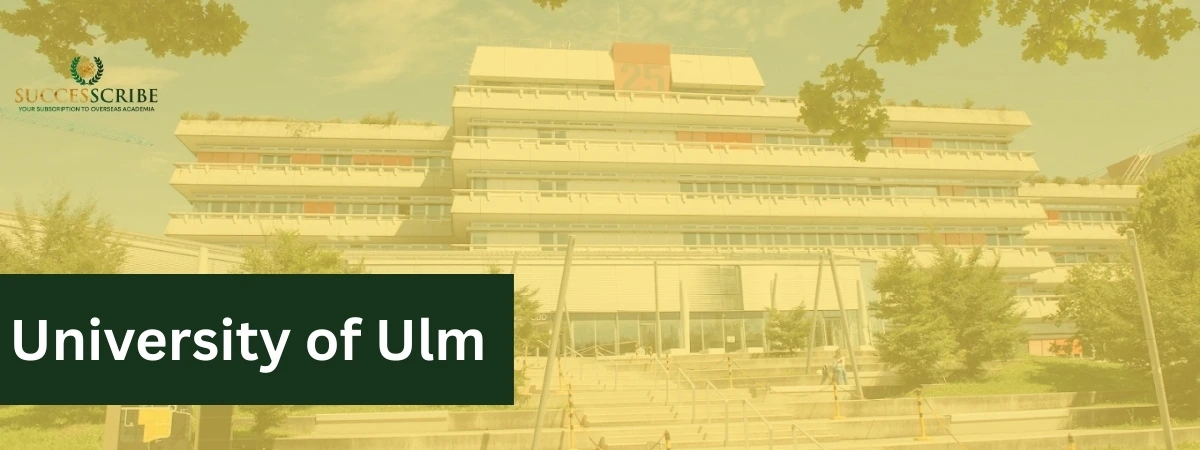
Ulm University represents a deliberate departure from the traditional “U15” German university model. While historic institutions like Heidelberg or Tübingen lean on centuries of prestige, Ulm – founded in 1967 – has positioned itself as an agile, research-intensive hub designed for the 21st-century economy. Often referred to as Germany’s “highest-altitude” university due to its literal geographic position on the Oberer Eselsberg hill, it is the beating heart of the “Science City” ecosystem. For the career-focused international student, the strategy here is clear: Ulm offers a “Science City” model where academic institutes, clinical centres, and global R&D headquarters (such as BMW and Siemens) are physically integrated. This provides a level of industrial proximity that larger, more generic universities cannot replicate. Operating under a philosophy of “interdisciplinarity under one roof,” Ulm has rapidly ascended to become a global leader in battery research and quantum science.
Key Highlights: University of Ulm
- Ranking and Reputation – University of Ulm
- Acceptance Rate at University of Ulm
- Faculties and Departments – University of Ulm
- Top Programs at University of Ulm
- Admission Criteria – University of Ulm
- Tuition Fees at the University of Ulm
- Scholarships and Financial Aid Strategy – University of Ulm
- Research, Innovation, and the “Science City” Ecosystem
- Career Prospects and Employment Outcomes
- Campus Life and the “Einstein” Legacy
- Notable Alumni – University of Ulm
- Conclusion
- FAQs
Want to Study in Germany?
Start your journey with Successcribe’s free expert guidance
Book a Free Session NowRanking and Reputation – University of Ulm
In the 2026 rankings, Ulm University continues to punch well above its weight, particularly in specialised research metrics. While its overall QS rank might seem modest, a strategist looks at the subject-specific data where Ulm rivals the world’s elite. The University of Ulm consistently performs well in subject-specific rankings, particularly in Medicine, Physics, Engineering, and Computer Science.
| Agency | Global Rank | Subject Strength / Regional Significance |
| THE World University Rankings | 251–300 | Top 200 for Medical & Health and Psychology. |
| QS World University Rankings | #546 | Ranked #33 in Germany; High “Citations per Faculty.” |
| QS Europe (Western Europe) | #95 | Top-tier regional reputation in the industrial Southwest. |
| THE Subject: Life Sciences | 251–300 | Strong alignment with the regional Biotech cluster. |
Acceptance Rate at University of Ulm
Unlike US/UK universities, German public universities do not officially publish acceptance rates. However, based on admission statistics:
| Category | Estimate Acceptance Rate |
| Overall University | 40–50% |
| Overall Estimated Acceptance Rate (International Students) | 15% – 25% |
| Competitive Master’s (CS, Data Science) | 20–30% |
| Medicine | Below 10% |
| General STEM programs | 35–45% |
Ulm University is not a “mass-market” institution. It maintains a selective profile to preserve its 16.2 student-to-staff ratio, ensuring high levels of interaction between professors and postgraduates.
- Numerus Clausus (NC): Admission to Medicine and Psychology is exceptionally competitive, often requiring a near-perfect GPA (German 1.0–1.2 equivalent).
- Non-NC STEM Programs: While more accessible, these require a strong quantitative background.
- The Research Premium: Because Ulm attracts over €67 million in third-party funding annually, Master’s students are frequently integrated into high-stakes research. Admission is therefore contingent on an applicant’s ability to demonstrate immediate “research readiness.”
Suggested Post: University of Cologne Berlin Acceptance Rate
Faculties and Departments – University of Ulm
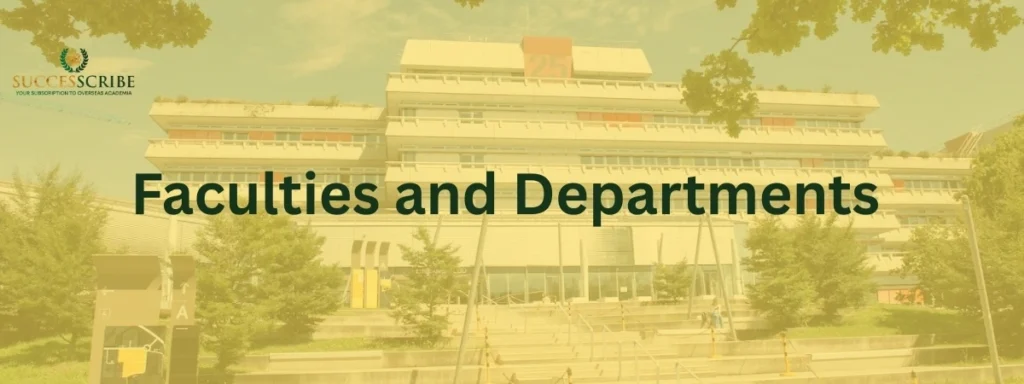
The University of Ulm operates through four major faculties:
- Faculty of Engineering, Computer Science and Psychology
- Computer Science
- Electrical Engineering
- Communications Technology
- Media Informatics
- Psychology
- Faculty of Mathematics and Economics
- Mathematics
- Mathematical Biometry
- Finance
- Actuarial Science
- Economics
- Faculty of Natural Sciences
- Physics
- Chemistry
- Biology
- Quantum Engineering
- Faculty of Medicine
- Human Medicine
- Molecular Medicine
- Biomedical Engineering
- Clinical Research
The Faculty of Medicine is one of the most research-intensive in southern Germany.
Each faculty is governed by a dean’s office responsible for academic coordination, student services, and program quality assurance. Together, the four faculties deliver more than 60 study programs across bachelor’s, master’s, and doctoral levels.
Beyond standard departments, the university operates several specialized research institutes, including:
- Institute for Quantum Optics – home to some of Germany’s leading quantum scientists
- Institute for Laser Technologies in Medicine and Measurement Technology (ILM)
- Institute for Neuroinformatics
- Center for Biosystems Analysis (ZBSA)
- Helmholtz Institute Ulm (HIU) – focused on electrochemical energy storage
The university also hosts four Collaborative Research Centers (Sonderforschungsbereiche / SFBs) funded competitively by the DFG, which are reviewed on a three-year rotation and represent the pinnacle of interdisciplinary German academic research.
Top Programs at University of Ulm
The University of Ulm offers a focused portfolio of 24 Bachelor’s and 37 Master’s degree programs. While many Bachelor’s programs are taught in German, a significant and growing number of Master’s programs are offered in English, attracting a global cohort of students.
Top Bachelor’s Program (Primarily German-taught)
- Human Medicine / Dentistry: The crown jewels of the university.
- Molecular Medicine: A research-heavy alternative to traditional medicine.
- Biomedical Engineering: Merging the engineering and medical faculties.
- Business Physics: A unique hybrid program that Ulm pioneered in Germany.
Master’s Programs (Highly popular English-taught)
| Course Name | Level | Duration | Language | Core Eligibility |
| Communications Technology | M.Sc. | 2 Years | English | B.Tech/B.E. in EE/CS/ICT |
| Finance | M.Sc. | 2 Years | English | Strong quantitative/Math-heavy degree |
| Molecular Medicine | M.Sc. | 2 Years | English | Bachelor’s in Bio/Med/Life Sciences |
| Energy Science & Tech | M.Sc. | 2 Years | English | Engineering or Physics background |
| Advanced Materials | M.Sc. | 2 Years | English | Chemistry/Physics/Materials Science |
| Cognitive Systems | M.Sc. | 2 Years | English | CS/Math/Psychology background |
Admission Criteria – University of Ulm
Admission to Ulm is rigorous, especially for international applicants. In 2026, the university has integrated more digital verification processes to handle the high volume of applications.
General Requirements
- Academic Records: A GPA of at least 2.5 on the German scale is typically required for Master’s programs.
- Language Proficiency:
- German: Goethe: B1 -B2 ,TestDaF 4 or DSH-2 for German-taught programs.
- English: TOEFL iBT (minimum 72–95) or IELTS (5.5–7.0) depending on the program.
- APS Certificate: Mandatory for students from India, China, and Vietnam. This verifies the authenticity of academic documents before the visa process begins.
Application Deadlines
| Intake | Deadline |
| Winter Semester | 15 July |
| Summer Semester | 15 January (limited programs) |
Tuition Fees at the University of Ulm
One of the most attractive features of studying at Ulm University – particularly for international students – is the low or no-tuition model that characterizes public universities in the German state of Baden-Württemberg.
For the majority of bachelor’s and master’s programs, no tuition fees are charged to either domestic or EU/EEA students. However, non-EU/EEA international students are required to pay tuition fees under a policy introduced in Baden-Württemberg.
| Student Category | Tuition Fee per Semester | Annual Tuition |
| German / EU / EEA students | €0 (tuition-free) | €0 |
| Non-EU / Non-EEA international students | €1,500 | €3,000 |
| Second-degree students (any nationality) | €650 | €1,300 |
| Online M.Sc. Advanced Oncology (all students) | €4,875 | €9,750 |
Apply to Top European Universities
Make your application simple and stress-free with Successcribe
Get Expert Help NowBeyond tuition, all students are required to pay a semester contribution fee, which covers administrative costs, student services, and public transport. This amounts to approximately €170 per semester, broken down as follows:
- University administration fee: €70
- Student union fee: €87
- Student body union: €13
Estimated Annual Cost of Living in Ulm (for International Students):
| Expense Category | Estimated Monthly Cost (€) | Annual Estimate (€) |
| Accommodation (student dormitory) | €250 – €400 | €3,000 – €4,800 |
| Food and groceries | €200 – €300 | €2,400 – €3,600 |
| Health insurance | €110 – €130 | €1,320 – €1,560 |
| Transport (local) | €30 – €60 | €360 – €720 |
| Books and study materials | €30 – €50 | €360 – €600 |
| Personal and leisure | €100 – €200 | €1,200 – €2,400 |
| Total Estimated Annual Living Cost | €8,640 – €13,680 |
Overall, Ulm is considered a moderately affordable German city compared to Frankfurt, Munich, or Berlin, making it an economically sensible destination for international students.
Suggested Post: University of Bonn QS ranking
Scholarships and Financial Aid Strategy – University of Ulm
International students should view these grants as strategic offsets for their living expenses.
- Deutschlandstipendium: €300/month. Best for: High-achievers with strong social commitment.
- DAAD Grants: Various amounts. Best for: International postgraduates with research-heavy profiles.
- STIBET Graduation Grant: One-time funding. Best for: Final-year students completing their Master’s thesis.
- Baden-Württemberg Scholarship: Monthly stipend. Best for: Students demonstrating exceptional academic or intercultural potential.
Research, Innovation, and the “Science City” Ecosystem
Ulm’s greatest asset is its physical location. The university is the core of a Science Park where researchers and industry giants share a post-code.
- POLiS (Post Lithium Storage): The university hosts Germany’s only Excellence Cluster for battery research, putting Ulm at the forefront of the global EV transition.
- The “Walk-to-Work” Advantage: Multinational R&D centres for BMW, Daimler, Continental AG, and Siemens are located directly on the Oberer Eselsberg. This allows students to transition from a morning lecture to an afternoon internship within a five-minute walk.
- Quantum Leadership: Ulm is a global pioneer in quantum sciences, focusing on the control of quantum systems for future computing.
Career Prospects and Employment Outcomes

The “Ulm Advantage” lies in the economic density of the Southwest. Ulm University is uniquely integrated into Science City Ulm, a high-tech hub where the boundary between the lecture hall and the industrial laboratory is nearly non-existent. For students graduating in 2026, the transition to the professional world is streamlined by a curriculum designed around industry demands.
Key Employment Statistics
| Metric | 2026 Outcome/Status |
| Employment Rate | 92% of graduates find a role within 6 months. |
| Average Starting Salary | €52,000 – €68,000 (varies by STEM vs. Humanities). |
| Industry Collaboration | 50+ partner companies participate in on-campus career fairs. |
| Top Sector | Automotive, MedTech, and Quantum Computing. |
Where Do Graduates Work?
Because of its location on the Oberer Eselsberg, students often walk from their last seminar straight into an internship at one of the adjacent research centers.
- Automotive & Engineering: Massive demand from Mercedes-Benz, BMW Group, and Continental for experts in autonomous driving and battery technology.
- Life Sciences & Health: The University Hospital Ulm and various biotech firms absorb almost all medical and molecular medicine graduates.
- Finance & Insurance: Ulm is a “hotspot” for Actuarial Science; graduates are heavily recruited by Allianz, Munich Re, and regional banks.
Support Systems for Success
- FIT4U Program: A specialized initiative designed to prepare international students for the German job market through workshops on business etiquette and networking.
- Entrepreneur Campus: In 2026, this hub supports student start-ups from day one, offering seed funding and mentorship for tech-driven business models.
- The Career Service Portal: A dedicated digital platform where students can access exclusive job listings from regional partners like Bosch and Teledyne.
Campus Life and the “Einstein” Legacy
Born in Ulm, Albert Einstein remains the university’s guiding spirit. The main campus address, Albert-Einstein-Allee, reinforces the commitment to scientific excellence.
- The Oberer Eselsberg: A modern, “lavishly green” campus overlooking the city and the Danube.
- Sustainability: Ulm is aiming for climate neutrality by 2030, integrating green energy research into its own campus operations.
- Welcome Culture: The International Office provides “Welcome Days” and integration support specifically for non-EU students.
Notable Alumni – University of Ulm
Ulm University’s alumni network is particularly strong in the corporate C-suite and high-level research institutes. Below is a concise table highlighting some recognised alumni associated with the University of Ulm. As the university was established in 1967, many alumni are prominent in academia, medicine, finance, and technology rather than historical political figures.
| Name | Field/Sector | Achievement/Role |
| Wolfgang Ketterle | Physics | Nobel Laureate (2001); Pioneer in Bose-Einstein condensation. |
| Nicole Grobert | Nanomaterials | Professor of Nanomaterials at Oxford; Advisor to the European Commission. |
| Andreas Barner | Business/Pharma | Former Chairman of the Board of Managing Directors at Boehringer Ingelheim. |
| Ashraf Mansour | Education | Founder and Prime Trustee of the German University in Cairo (GUC). |
| Markus Büchler | Medicine | World-renowned surgeon; Expert in pancreatic cancer research and treatment. |
| Marion Gruber | Biotechnology | Former Director of the Office of Vaccines Research and Review at the U.S. FDA. |
| Stefan Mappus | Politics | Former Minister-President of the state of Baden-Württemberg. |
| Reiner Knizia | Gaming/Math | One of the world’s most prolific and successful board game designers. |
| Klaus Blaum | Atomic Physics | Director at the Max Planck Institute for Nuclear Physics. |
| Britta Kamrau | Sports | World-class open water swimmer; Multiple-time European and World Champion. |
| Ish Dhand | Quantum Tech | Co-founder and CEO of QC Design (Quantum Computing). |
Conclusion
Ulm University offers a high-value strategic trade-off. It provides the elite research credentials of a major German public university without the anonymity of a massive metropolitan institution. For an Indian student, the relatively low tuition fee of €3,000 per year is a small price to pay for direct access to the R&D labs of BMW and Daimler. In 2026, Ulm remains the premier destination for those who want their academic training to be physically and intellectually connected to the future of industry.
FAQs
Is the University of Ulm a public or private university?
The University of Ulm is a public research university established in 1967. It is state-funded and follows Germany’s public higher education regulations.
What is the acceptance rate of the University of Ulm?
The estimated acceptance rate ranges between 40–50%, but competitive programs like Computer Science, Data Science, and Medicine may have lower acceptance rates (20–30% or below).
Is the University of Ulm good for Computer Science?
Yes. The university is well-regarded for Computer Science, Artificial Intelligence, Data Science, and Engineering, with strong research facilities and industry connections in Baden-Württemberg.
What is the average cost of living in Ulm?
Students typically need €870–€1,170 per month, covering accommodation, food, insurance, and other expenses. Annually, this amounts to approximately €10,000–€14,000.
What are the career prospects after graduating from the University of Ulm?
Graduate employment rates are around 88–92% within 12 months. STEM graduates often secure roles in technology, automotive, finance, and healthcare sectors with starting salaries ranging from €50,000 to €70,000 per year.
Related Post
Leibniz University Hannover
Clausthal University of Technology
Karlsruhe Institute of Technology
Humboldt University of Berlin