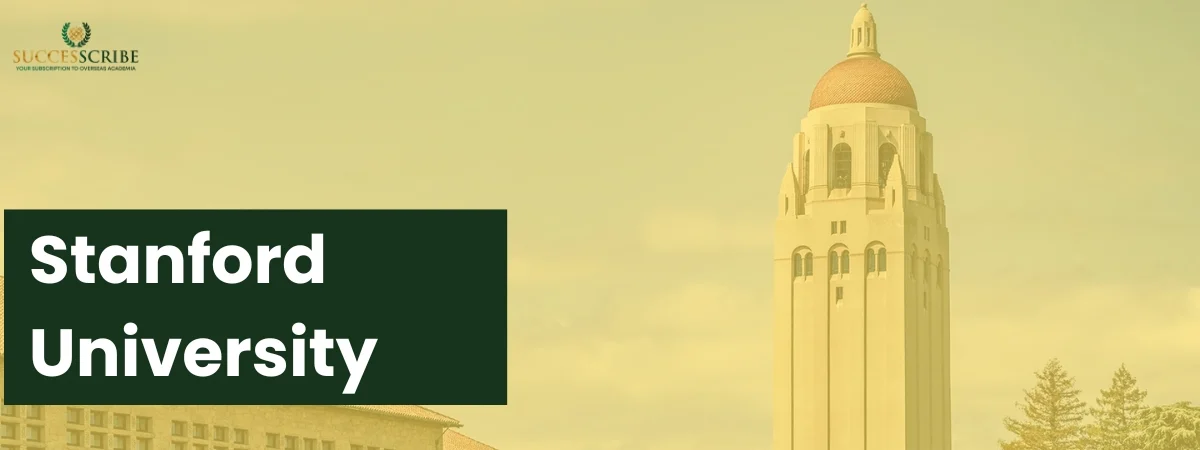
Stanford University, officially known as Leland Stanford Junior University, stands as one of the world’s most prestigious higher-education institutions, known for its pathbreaking research, industry-leading innovation, and deep ties to Silicon Valley. Founded in 1885, Stanford has grown into a powerhouse of academic excellence, entrepreneurship, and global impact. With one of the largest university campuses in the world and a community of scholars from over 90+ countries, the university continues to shape the world through technology, science, arts, policy, and business. Stanford’s unique combination of rigorous academics, interdisciplinary research, ultra-selective admissions, and unmatched startup culture makes it a dream destination for students around the globe. The university remains consistently ranked among the Top 3 universities worldwide, reaffirming its status as a global academic and innovation leader.
Key Highlights – Stanford University
- Why Stanford Matters: The Powerhouse of Innovation
- Rankings & Reputation of Stanford University
- Admissions & Selectivity at Stanford University
- Cost of Studying at Stanford University
- Scholarships at Stanford University
- Departments at Stanford University
- Top Programs at Stanford University (Undergraduate & Graduate)
- Career Outcomes at Stanford University
- Notable Alumni of Stanford University
- Conclusion
- FAQs
Why Stanford Matters: The Powerhouse of Innovation
Stanford University is not just a top-ranked institution – it is the epicenter of global innovation, a place where breakthrough ideas, bold research, and entrepreneurial ambition intersect every single day. What makes Stanford truly stand out is its ability to transform knowledge into real-world impact on an unprecedented scale. Here are the most prominent reasons why Stanford matters more than ever:
1. The Birthplace of Silicon Valley
Stanford is widely regarded as the intellectual engine behind Silicon Valley. Its faculty, students, and alumni have played a direct role in shaping the tech hub that fuels the world’s digital economy. From early semiconductor research to cutting-edge AI labs, Stanford’s influence is embedded in every era of Silicon Valley’s growth.
2. A Culture That Turns Ideas Into Companies
Innovation at Stanford isn’t confined to research labs – it becomes startups, patents, and scalable technologies. With world-class incubators like StartX, countless accelerators, and deep ties with venture capital giants, Stanford students are taught to think boldly and execute fast. This unique entrepreneurial culture has produced some of the most influential companies in history, including Google, Netflix, Hewlett-Packard, and LinkedIn.
3. A Magnet for Global Talent
Stanford attracts the world’s smartest minds, including Nobel laureates, MacArthur geniuses, research pioneers, and high-achieving students from over 90+ countries. Its admissions model focuses on creativity, leadership, intellectual vitality, and a desire to solve global problems – creating a campus filled with people who aspire to change the world.
4. Research That Defines the Future
Stanford’s research output is among the most impactful globally. From AI and machine learning to biosciences, quantum computing, clean energy, and space technology, Stanford consistently works at the forefront of discovery. Its research funding surpasses USD 1.8+ billion annually, enabling scientists and engineers to experiment with ideas that can change industries.
5. Collaboration Over Competition
Unlike many elite institutions, Stanford fosters a culture of interdisciplinary collaboration rather than cutthroat competition. Engineers work with doctors, business students collaborate with climate scientists, and humanists partner with computer scientists. This collaborative ecosystem leads to creative solutions that would be impossible in isolated academic settings.
6. Direct Pipeline to Industry Leaders
Stanford’s proximity to top global companies – Google, Apple, Meta, Tesla, Nvidia, Cisco, and more – creates unmatched internship, networking, and job opportunities. Students engage with CEOs, founders, and industry pioneers regularly, making Stanford one of the strongest career-launching platforms in the world.
7. A Vision Built on Impact, Not Just Academics
Stanford’s mission is not just to educate – it is to solve real problems. Climate change, public health, cybersecurity, economic mobility, sustainable technology, global policy – Stanford positions itself at the center of major global challenges and empowers its students to become the next generation of problem-solvers.
8. A Campus Designed for Creativity
Stanford’s 8,180-acre campus is not only one of the largest in the U.S., but also one of the most inspiring. Innovation thrives in an environment filled with cutting-edge labs, world-class libraries, design studios, experimental facilities, and collaborative workspaces that make creativity feel natural, not forced.
Want to Study in Germany?
Start your journey with Successcribe’s free expert guidance
Book a Free Session NowRankings & Reputation of Stanford University

The numbers below reflect how Stanford continues to dominate global higher-education rankings – across research strength, academic reputation, global impact, and employability.
| Ranking System | Most Recent Rank (2024–2026) | What It Reflects / Why It Matters |
| QS World University Rankings | #3 globally (2026) | Balanced excellence: academic reputation, research output, faculty resources, employer reputation, graduate outcomes. |
| THE World University Rankings | #6 globally (2025) | Strong research, teaching, citations, global outlook and knowledge transfer. |
| ARWU (Shanghai Ranking) | #2 globally (2024 & 2025) | Heavy focus on research output, quality, Nobel laureates & citation impact. |
| US News Best Global Universities | Top 5 globally (2025–2026), with Stanford among #3 – #5 range | Research performance, global reputation, publication and citation metrics across disciplines. |
Stanford remains in the Top 3 globally, dominating research metrics, innovation, and academic reputation. While rankings shift slightly year to year, Stanford’s position among the elite has remained stable for over two decades.
Admissions & Selectivity at Stanford University

Gaining admission to Stanford is often described as “one of the most competitive achievements in global higher education, and the numbers justify that reputation. Stanford’s admission process emphasizes far more than just academic excellence; it looks for intellectual bravery, creativity, leadership, impact, and a genuine commitment to shaping the future.
How Selective Is Stanford?
Stanford consistently ranks among the most selective universities in the world, with acceptance rates that reflect the immense global demand for its programs. Although the university has not released official acceptance rates since 2018, reliable national data trends show:
| Category | Selectivity / Notes |
| Undergrad Acceptance Rate | 3–4% (one of the lowest globally) |
| Graduate Acceptance Rate (Overall) | 6–12%, depending on the program |
| Stanford Engineering (MS/PhD) | Highly selective; many programs admit 5–7% |
| Stanford Computer Science (Graduate) | Among the toughest in the world; admits <5% in some cycles |
| Stanford GSB MBA | Approx. 6% admit rate; global top-tier competitiveness |
| International Student Intake | Strong but selective; thousands apply annually |
What Stanford Really Looks for
Stanford’s admissions philosophy is built around identifying students who demonstrate:
- Academic excellence: High grades, strong curriculum, and exceptional performance in rigorous subjects.
- Intellectual vitality: Curiosity, passion for learning, and evidence of going beyond the classroom.
- Impact & leadership: Initiative shown through community work, innovation, research, entrepreneurship, or arts.
- Authenticity & personal depth: Honest, reflective writing; unique personal experiences; meaningful challenges.
- A vision for the future: Students who show purpose, direction, and the potential to create change.
This holistic evaluation means Stanford is not looking for “perfect profiles,” but for deeply curious, motivated, and original thinkers.
What Sets Successful Applicants Apart
Applicants who stand out usually demonstrate:
- Exceptional academic achievement plus meaningful extracurricular depth
- Strong letters of recommendation showing intellectual promise
- Clear personal voice in essays (Stanford values genuine self-expression)
- Originality, innovation, or problem-solving ability
- Evidence of resilience, challenges overcome, or community leadership
Stanford famously evaluates applicants based not on “how much they have done” but on how meaningfully they have done it.
Cost of Studying at Stanford University
Stanford University is one of the most prestigious institutions in the world, and with that reputation comes a significant investment in education. The cost of studying at Stanford depends on the level of program (Bachelor’s, Master’s, PhD), the school or department, and the student’s living preferences.
Despite the high cost, Stanford offers a generous financial aid policy, with nearly 70% of undergraduates receiving financial assistance and many graduate students funded through assistantships, fellowships, or research roles.
Stanford Undergraduate Tuition Fees
| Component | Annual Cost (USD) |
| Tuition Fee | $62,520 |
| Student Fees | $2,205 |
| Health Insurance | $7,800 – $8,200 |
| Total Undergraduate Tuition | $72,500 – $73,000 |
Graduate Tuition (Master’s Programs)
Graduate tuition varies depending on the department.
| Stanford School / Program | Annual Tuition (USD) |
| School of Engineering (MS) | $60,840 – $63,300 |
| School of Humanities & Sciences | $58,800 – $61,200 |
| School of Education | $61,500 |
| School of Sustainability | $59,700 – $62,400 |
| School of Business (MBA) | $82,500 |
| School of Law (JD) | $73,900 |
| Stanford Medicine (MD) | 69,200 |
Scholarships at Stanford University
Stanford University is committed to making world-class education accessible to talented students from all backgrounds. Although Stanford does not offer merit-based scholarships, it provides one of the strongest need-based financial aid systems in the world, along with competitive research fellowships, assistantships, and prestigious external awards.
Stanford Undergraduate Scholarships (Need-Based Aid)
Stanford’s undergraduate financial aid program is considered one of the most generous globally. Aid is based entirely on family financial circumstances, not academics or test scores.
| Category | Details (2025–26 Updated) |
| Type of Aid | Need-based (grants + work-study) |
| Families earning below $100,000 | Pay $0 in tuition |
| Families earning below $75,000 | Pay $0 in tuition + room & board |
| Average Annual Grant | $62,000+ |
| Students graduating debt-free | 85% |
| Loan Requirement | No loans required – replaced with grants and campus jobs |
Scholarships for International Students
Stanford treats domestic and international students the same when awarding financial aid.
There is no separate international scholarship; all admitted students are eligible for the same grants.
| Feature | Details |
| Eligibility | All admitted international undergraduates |
| Aid Type | Need-Based Grants |
| Maximum Grant Value | Up to 100% of tuition + living costs, depending on need |
| Required Documents | CSS Profile, Parent income statements, Bank documents |
Graduate Financial Aid & Fellowships
Graduate students at Stanford have access to a wide range of funding opportunities, from university-wide fellowships to department-specific assistantships.
1. Knight-Hennessy Scholars Program (Graduate)
The world’s largest fully endowed graduate scholarship program.
Knight-Hennessy Scholars at Stanford University announced its 2025 cohort of 84 new scholars. This eighth cohort comprises students from 25 countries who will pursue degrees in 46 graduate programs across all seven graduate schools at Stanford.
| Program Feature | Details |
| Number of Scholars per Year | 100 (84-100 annually) |
| Countries Represented (2025) | 25 countries |
| Graduate Programs Covered | All 46+ programs across 7 schools |
What It Covers:
- Full tuition for up to 3 years of graduate study
- Annual living stipend covering housing, meals, books, supplies, and personal expenses
- Annual travel allowance (economy-class round-trip ticket to/from home country)
- Leadership development program including workshops, seminars, and global experiences.
Eligibility:
- Must apply to and be admitted to a full-time Stanford graduate program (MA, MS, MBA, PhD, JD, MD, etc.)
- Must have earned a U.S. bachelor’s degree or its equivalent in January 2019 or later (for 2026 enrollment)
- Must demonstrate independence of thought, purposeful leadership, and civic commitment
- Open to citizens of all countries.
2. Stanford Graduate Fellowship (SGF) – Science & Engineering
One of the most prestigious doctoral fellowships at Stanford.
| Fellowship Feature | Details |
| Number Awarded Annually | 100 fellowships |
| Duration | 2-3 years (8-12 quarters) |
| Annual Stipend (2025-26) | $58,200 ($14,550/quarter) |
| Coverage | Full tuition + stipend |
| Eligible Fields | Natural sciences, mathematics, statistics, engineering, basic medical sciences, and select social sciences |
Configurations:
- Standard 3-Year SGF: 12 quarters of support (4 quarters/year for 3 years)
- Modified 3-Year SGF: 11 quarters (for Engineering and Education students)
- Standard 2-Year SGF: 8 quarters (4 quarters/year for 2 years)
How to Apply:
Students are nominated by their department – no separate application required. Outstanding applicants are automatically considered during the admissions process.
3. Stanford Interdisciplinary Graduate Fellowship (SIGF)
For doctoral students pursuing cutting-edge interdisciplinary research.
| Fellowship Feature | Details |
| Duration | 3 years |
| Eligibility | Current Stanford PhD students in years 1-3 |
| Annual Stipend | $58,200 |
| Coverage | Full tuition + stipend + research support |
Focus Areas:
- Research crossing traditional disciplinary boundaries
- Novel, innovative questions requiring interdisciplinary approaches
- Projects linking intellectual innovation with societal problems
4. Other Major Graduate Fellowships
| Fellowship Name | Target Group | Duration | Annual Value |
| Gerald J. Lieberman Fellowship | Outstanding doctoral students | 1 year | Full tuition + stipend |
| EDGE Fellowship | Incoming doctoral students contributing to diversity | 2-3 years | Full funding |
| DARE Fellowship | Advanced PhD students preparing for faculty careers | 2 years | Full funding |
| CCSRE Fellowship | Students studying race, ethnicity, and culture | 3 years | Full funding |
| RAISE Fellowship | Students focused on community impact research | Variable | Full funding + experiential learning |
| ARCS Scholar Award | STEM doctoral students | 1-3 years | $10,000 – $15,000/year |
5. Department-Specific Support
Most graduate departments offer additional funding:
- Research Assistantships (RA):
- Full tuition waiver + monthly stipend ($30,000 – $50,000/year)
- Work on faculty research projects
- Gain valuable research experience
- Teaching Assistantships (TA):
- Full or partial tuition waiver + stipend
- Teach or assist in undergraduate courses
- Develop teaching skills
- School-Specific Fellowships:
- GSB MBA Fellowships: Need-based awards of $44,000 – $88,000
- Law School Fellowships: Public interest and merit-based awards
- Medicine Dean’s Fellowships: For postdoctoral researchers
- Engineering Fellowships: Numerous endowed fellowships
External Scholarships for Stanford Students
Stanford strongly encourages students to apply for external scholarships. These can reduce or eliminate the student contribution portion of aid packages.
| Scholarship Name | Eligibility | Coverage | Application Timeline |
| Fulbright Foreign Student Program | International graduate students | Full tuition + living expenses | October annually |
| Tata Scholarship | Indian undergraduate students | Full financial need | With admission application |
| Stanford Reliance Dhirubhai Fellowship | Indian MBA students at GSB | Partial to full tuition | MBA application cycle |
| Inlaks Scholarship | Indian graduate students | Up to $100,000 | December – January |
| Chevening Scholarship | UK citizens for Master’s | Full funding | November annually |
| Commonwealth Scholarship | Commonwealth country citizens | Full funding | Various deadlines |
| DAAD Scholarship | German citizens/residents | Partial to full funding | October – November |
Departments at Stanford University
Stanford University is organized into seven world-class schools, each home to multiple departments, research centers, laboratories, and interdisciplinary institutes. Together, they reflect Stanford’s core strength: combining rigorous academic study with innovation, technology, entrepreneurship, and real-world impact.
Stanford has over 90+ academic departments, 200+ research centers, and 7 schools that collectively cover every major field – from engineering and business to humanities, medicine, law, and sustainability.
1. School of Humanities and Sciences (H&S)
The largest academic unit at Stanford, responsible for nearly 75% of undergraduate majors.
Key Departments:
- Biology
- Chemistry
- Mathematics
- Physics
- Psychology
- Anthropology
- Economics
- Sociology
- Philosophy
- Communication
- Linguistics
- English
- History
Why It Stands Out:
Home to several Nobel laureates and highly cited researchers across STEM and social sciences.
2. School of Engineering
One of the most prestigious engineering schools globally, with 9 academic departments.
Major Departments:
- Computer Science
- Mechanical Engineering
- Electrical Engineering
- Civil & Environmental Engineering
- Bioengineering (joint with Medicine)
- Aeronautics & Astronautics
- Materials Science & Engineering
- Management Science & Engineering
- Chemical Engineering
Highlight:
Over 40% of Stanford undergrads take at least one engineering course.
3. Stanford Graduate School of Business (GSB)
Among the world’s top business schools – consistently ranked #1 or #2 globally.
Departments & Areas of Study:
- Accounting
- Economics
- Finance
- Marketing
- Organizational Behavior
- Political Economy
- Operations, Information & Technology
Known For:
The MBA, MSx Program, and deep connections with Silicon Valley entrepreneurs and investors.
4. Stanford School of Medicine
A global leader in medical research, biotechnology, and clinical innovation.
Core Departments Include:
- Genetics
- Biochemistry
- Pathology
- Neurology
- Neurosurgery
- Biomedical Informatics
- Immunology
- Radiology
- Cardiovascular Medicine
- Psychiatry & Behavioral Sciences
Highlight:
Home to 30+ interdisciplinary institutes, including Stanford Bio-X.
5. Stanford Law School
One of the top 5 law schools globally.
Key Areas & Departments:
- Constitutional Law
- Corporate Governance
- Intellectual Property
- Environmental Law
- International Law
- Criminal Justice
- Legal Studies & Policy
Known For:
Small class sizes and strong industry exposure, especially in tech-law and policy.
6. Stanford School of Sustainability (formerly School of Earth, Energy & Environmental Sciences)
Renamed with a broader mission to address global climate challenges.
Departments:
- Earth System Science
- Geophysics
- Geological Sciences
- Energy Resources Engineering
- Environmental Social Sciences (interdisciplinary)
Highlight:
Home to the Stanford Doerr School of Sustainability (launched in 2022 with a historic $1.1 billion donation).
7. Stanford School of Education (Graduate School of Education)
A top-ranked education school known for research and policy innovation.
Departments & Programs:
- Curriculum Studies
- Learning Sciences & Technology
- Education Policy
- Teacher Education
- Developmental & Psychological Sciences
Top Programs at Stanford University (Undergraduate & Graduate)

Stanford University is known for offering some of the most prestigious and competitive academic programs in the world. Whether in engineering, computer science, business, humanities, or life sciences, Stanford consistently ranks among the Top 5 universities globally in nearly every major discipline.
With over 70+ undergraduate majors and 90+ graduate fields, Stanford attracts students who want to pursue cutting-edge research, innovation, and interdisciplinary learning. The programs listed below are not only the most sought-after but also the ones with the highest global impact and exceptional career outcomes.
Most Popular Undergraduate Programs at Stanford
Stanford’s undergraduate offerings combine rigorous academics with unmatched access to Silicon Valley, research labs, and global industry partners. Below is a table showing the top UG majors, their highlights, and global standing.
Top Undergraduate Programs at Stanford University
| Program | Why It Stands Out | Global Recognition / Ranking |
| Computer Science (BS) | Largest major at Stanford; access to AI, ML, robotics, HCI labs | Ranked #1 globally for CS & AI |
| Engineering (All Majors) | 9 departments; heavy research focus; top faculty | Stanford Engineering consistently Top 5 worldwide |
| Economics (BA) | Strong foundations in micro, macro, and econometrics | Often ranked Top 5 in the U.S. |
| Human Biology (BA/BS) | Interdisciplinary bio + social sciences program | One of Stanford’s most subscribed majors |
| Management Science & Engineering | Tech + business + analytics program | Top choice for tech consulting careers |
| Psychology (BA/BS) | Research-driven; strong cognitive science foundation | Ranked Top 3 in the U.S. |
| Political Science (BA) | Ideal for law, government, public policy | Top 10 in U.S. |
| Mathematics / Mathematical & Computational Science | Strong analytical and data-driven curriculum | Top 10 globally |
| Biology (BS) | Research-heavy; access to Stanford Medicine facilities | Top 10 worldwide for life sciences |
| Symbolic Systems | Interdisciplinary: CS + Philosophy + Linguistics + Psychology | Unique program; ranked highly for AI-thinking skills |
- Computer Science remains the most popular undergraduate major for over 10 consecutive years.
- Nearly 80% of Stanford undergraduates participate in research before graduating.
- Stanford Engineering enrolls 2,000+ undergraduates, making it one of the top engineering destinations in the world.
Apply to Top German Universities
Make your application simple and stress-free with Successcribe
Get Expert Help NowTop Graduate Programs at Stanford University
Stanford’s graduate programs (MS, MA, MBA, MD, JD, PhD) are globally recognized for their selectivity, research strength, funding availability, and industry impact. Some graduate programs have acceptance rates below 5%, placing them among the most competitive in the world.
| Program (Graduate) | Highlights | Global Rankings / Recognition |
| MBA (Stanford GSB) | Known for entrepreneurship, leadership, VC connections | Ranked #1 MBA globally (multiple years) |
| MS in Computer Science | Specializations: AI, ML, Systems, HCI, Vision, Theory | Stanford CS ranked #1 worldwide |
| MS/PhD in Electrical Engineering | AI chips, semiconductors, networking, circuits | Top #1–3 globally |
| MS in Mechanical Engineering | Robotics, energy, fluid mechanics, design | Consistently Top 5 worldwide |
| MS in Data Science | Part of Statistics/CS; high industry demand | Top destination for AI & analytics |
| MS in Bioengineering (Joint with Medicine) | Biomedical devices, tissue engineering, biotech | Ranked among Top 5 globally |
| JD (Stanford Law School) | Small class size, IP law, tech law leadership | Ranked #2 in the U.S. |
| MD Program (School of Medicine) | Top-tier clinical + research focus | Ranked Top 10 globally for medicine |
| MS/PhD in Management Science & Engineering | Tech-business-analytics hybrid program | Leading program worldwide |
| MS in Environmental Engineering / Sustainability | Part of the new Doerr School of Sustainability | Highly ranked for climate & energy research |
- Stanford GSB’s MBA program has an acceptance rate of around 6%, making it the most selective MBA in the world.
- Over 80% of graduate students receive research or financial support through assistantships, fellowships, or grants.
- Stanford’s PhD programs are globally known for innovation and interdisciplinary training, often leading to top academic, research, and industry positions.
Career Outcomes at Stanford University

Stanford University continues to rank among the top 3 institutions worldwide for graduate employability, innovation, and startup success. With a powerful network of alumni and industry partnerships, Stanford graduates secure exceptional opportunities in technology, finance, consulting, research, biotechnology, and entrepreneurial ventures.
The university’s location in Silicon Valley and its reputation for producing leaders give students unmatched exposure to high-impact roles, global companies, and cutting-edge industries.
Undergraduate Employment/Placement:
- Within 6 months of graduation: 92–96% of graduates are employed, in graduate school, or pursuing other opportunities like fellowships or startups.
- Career Fields: Technology (30–35%), consulting (10–12%), finance (8–10%), healthcare/medicine (8–10%), education (5–7%), public service/nonprofit (5–8%), entrepreneurship/startups (5–7%), and other sectors.
Graduate Employment (Master’s Programs):
- Engineering MS graduates: 95%+ employment rate with offers often secured before graduation.
- MBA graduates (GSB): 98–99% employment rate within 3 months, with many accepting offers before graduation.
- Other graduate programs: High placement rates with most graduates securing positions in their desired fields.
PhD Placement:
- Stanford PhD graduates are highly competitive for tenure-track faculty positions, top-tier industry research roles, and leadership positions in government and nonprofits.
- Many PhD alumni join companies like Google, Microsoft, OpenAI, or start their own ventures.
Average Starting Salaries by Program
Stanford graduates command some of the highest starting salaries in the nation:
Undergraduate Starting Salaries (Recent Graduates)
| Major/Field | Average Starting Salary |
| Computer Science | $120,000–$150,000+ |
| Engineering (All) | $100,000–$130,000+ |
| Economics/Business | $85,000–$110,000 |
| Math/Statistics | $95,000–$120,000 |
| Life Sciences/Biology | $60,000–$80,000 (Industry); Higher for Med School-bound |
| Humanities/Social Sciences | $55,000–$75,000 |
| Public Policy/Government | $50,000–$70,000 |
Tech salaries often include stock options and bonuses that can add $20,000–$50,000+ annually.
Graduate Starting Salaries
| Program | Average Starting Salary |
| MBA (Stanford GSB) | $175,000–$200,000 base + signing bonuses + stock |
| MS Computer Science | $140,000–$180,000+ total compensation |
| MS Engineering (Various) | $110,000–$150,000+ |
| JD (Law School) | $190,000–$215,000 (Big Law); $60,000–$80,000 (Public Interest) |
| MD (Medical School) | $60,000–$70,000 (Residency); $200,000+ (Attending Physician) |
| PhD (Industry) | $130,000–$200,000+ depending on field |
Notable Alumni of Stanford University
Stanford’s alumni network includes industry-changing founders, Nobel winners, CEOs of trillion-dollar companies, global leaders, and world-class innovators.
| Name | Position / Achievement | Industry / Contribution |
| Larry Page | Co-Founder, Google | Technology, Internet |
| Sergey Brin | Co-Founder, Google | Technology, Internet |
| Jensen Huang | Co-Founder & CEO, NVIDIA | AI, Semiconductors, GPUs |
| Elon Musk | Founder, SpaceX & Tesla (Attended Stanford PhD briefly) | Space, EVs, Tech |
| Reed Hastings | Co-Founder & Former CEO, Netflix | Entertainment, Tech |
| Peter Thiel | Co-Founder, PayPal; Investor | Venture Capital, Tech |
| Sundar Pichai | CEO, Alphabet (Google) | Technology |
| Satya Nadella | CEO, Microsoft (Attended Stanford GSB) | Technology |
| Phil Knight | Founder, Nike | Business, Sportswear |
| Herbert Hoover | 31st President of the United States | Politics, Leadership |
| Cory Booker | U.S. Senator | Politics |
| Sandra Day O’Connor | First Female U.S. Supreme Court Justice | Law, Judiciary |
| Tiger Woods | 15-time Major Golf Champion | Sports |
| Reese Witherspoon | Academy Award–Winning Actress (attended Stanford) | Entertainment |
| Reid Hoffman | Co-Founder, LinkedIn | Technology, Entrepreneurship |
| Marissa Mayer | Former CEO, Yahoo | Tech Leadership |
Conclusion
Stanford University stands as far more than an elite academic institution – it is a world where ideas evolve into innovation, where ambition meets opportunity, and where students are empowered to shape the future on a global scale. From its Nobel-winning research ecosystem and industry-transforming alumni network to its cutting-edge academic programs and generous financial support system, Stanford represents the perfect blend of excellence, possibility, and purpose. Ultimately, choosing Stanford means choosing a future filled with possibilities. It means joining a community that dares to ask bolder questions, solve harder problems, and envision a better world. It means becoming part of a legacy that continues to redefine industries, influence societies, and inspire generations.
FAQs
What is Stanford University best known for?
Stanford is world-renowned for its excellence in Engineering, Computer Science, Business, Medicine, and Entrepreneurship. Its deep integration with Silicon Valley makes it a global hub for innovation, research, and startup culture.
What is the acceptance rate at Stanford University in 2025–26?
Stanford remains one of the most selective universities in the world, with an estimated acceptance rate of 3–4% for undergraduate admissions in 2025–26. Graduate program acceptance rates vary depending on the department.
How much does it cost to study at Stanford University?
The total cost of attendance (tuition, living expenses, books, and fees) ranges from $82,000–$95,000 per year depending on the program and degree level (2025–26 estimates). Many students receive financial aid that significantly reduces the cost.
What are the top courses offered at Stanford University?
Some of the most popular and prestigious programs include:
1. Computer Science
2. Engineering (Electrical, Mechanical, AI, Robotics)
3. Business Administration (MBA)
4. Medicine & Biosciences
5. Economics
6. Law
7. Data Science & Statistics
What are the career outcomes after graduating from Stanford?
Stanford students secure top-tier placements with companies like Google, McKinsey, Tesla, Apple, Meta, and Goldman Sachs. The average starting salary for Stanford graduates ranges from $110,000 to $160,000, depending on the field.
Related Post
Massachusetts Institute of Technology
Duolingo accepting universities in USA
Masters in dentistry in USA
Masters in embedded systems in USA