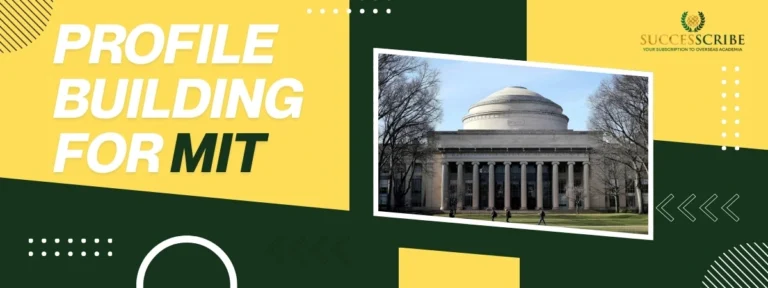
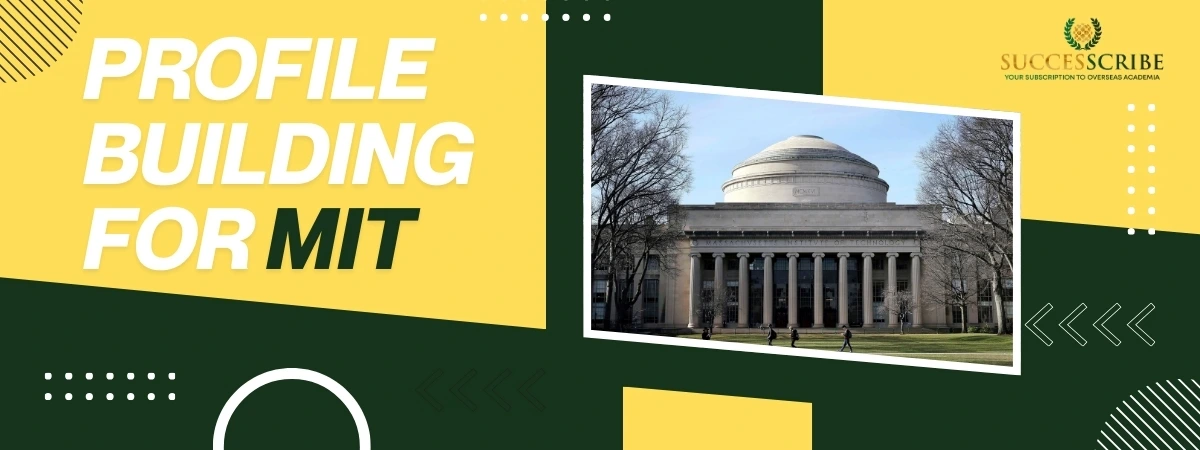
The Massachusetts Institute of Technology (MIT), located in Cambridge, Massachusetts, is widely regarded as the most prestigious science, engineering, and technology institution in the world. Since its founding in 1861, MIT has been synonymous with groundbreaking scientific discovery, innovation, entrepreneurship, and world-transformative research.
With a legacy of producing 105 Nobel Prize winners, 59 National Medal of Science recipients, 41 astronauts, and some of the most influential leaders in tech, research, and business, MIT continues to redefine what modern higher education and research should look like. As of 2026, MIT stands as the #1 university globally according to the QS World University Rankings 2025, holding the top position for an unprecedented 14th consecutive year. It remains the world’s most competitive and sought-after study destination for students passionate about scientific excellence, entrepreneurship, and solving the world’s most complex challenges.
Key Highlights – Massachusetts Institute of Technology
- The History and Evolution of MIT
- Why MIT Is Considered the Best in the World
- MIT Rankings
- Admissions & Selectivity at MIT
- Massachusetts Institute of Technology Acceptance Rate
- MIT Schools, Departments, and Learning Styles
- Cost of Studying at MIT
- Scholarships & Financial Aid at MIT
- Top Programs at MIT (Bachelor’s & Master’s)
- MIT Career Outcomes
- Conclusion
- FAQs
The History and Evolution of MIT
The story of the Massachusetts Institute of Technology began in 1861, amidst America’s industrial revolution. Its founder, William Barton Rogers, envisioned a new kind of educational institution, one that broke from the classical tradition of the time. He sought to create a college rooted in scientific theory and laboratory practice, designed to address the practical needs of a rapidly industrializing world. Despite its charter being signed in 1861, the Civil War delayed the opening of its first classes until 1865 in Boston’s Back Bay.
MIT’s early years were defined by a “learning by doing” approach, a radical departure from the norm. The curriculum emphasized laboratory work, physical experimentation, and direct engagement with industrial challenges. This foundational principle attracted students and faculty who were builders, tinkerers, and inventors. The institute’s growth, however, was constrained by its Boston location. A pivotal moment in its history came in 1916, when MIT, under President Richard Maclaurin, orchestrated a monumental move across the river to Cambridge. This relocation was not just a change of address; it was a strategic alignment with Harvard University and a bet on a new center of intellectual gravity.
The 20th century saw MIT’s influence explode, particularly during and after World War II. The Radiation Laboratory, established at MIT, was instrumental in developing Allied radar technology, a decisive factor in the war. This success cemented a new relationship between the university, the federal government, and industry. Post-war, figures like Vannevar Bush articulated a vision where government funding for basic scientific research at places like MIT would drive economic growth and national security—a model that continues to this day.
The late 20th and early 21st centuries have seen MIT’s domain expand beyond engineering and physical sciences. The Sloan School of Management became a world leader, the Humanities, Arts, and Social Sciences departments gained prominence as critical components of a technologist’s education, and the Media Lab was founded to explore anti-disciplinary research at the convergence of technology, multimedia, and society. Today, the Massachusetts Institute of Technology stands as a testament to its founding vision, having evolved into a comprehensive university whose impact on technology, economics, and culture is immeasurable.
Key Historical Milestones Table
| Year | Milestone | Impact on MIT & the World |
| 1861 | MIT founded by William Barton Rogers | Established the first U.S. institution dedicated to applied science and practical engineering. |
| 1865 | First classes begin in Boston | Launch of MIT’s signature “learning by doing” education model. |
| 1916 | Relocation to Cambridge campus | Enabled massive expansion; today the campus spans 168 acres with 100+ major buildings. |
| 1940 – 45 | MIT’s Rad Lab leads radar innovation | Revolutionized WWII communications; catalyzed the postwar $2B+ electronics industry. |
| 1951 | Establishment of Lincoln Laboratory | Strengthened MIT’s national defense and advanced computing contributions. |
| 1985 | MIT Media Lab founded | Pioneered interdisciplinary research in digital media, AI, and human-technology interaction. |
| 2000s | Rapid expansion in biotechnology, nanotechnology, and computing | Cemented MIT as a global research powerhouse. |
| 2019 | Launch of the Schwarzman College of Computing | $1B initiative to integrate AI and computing across all disciplines. |
| 2025–26 | MIT ranked #1 globally (14th consecutive year, QS) | Reaffirms MIT’s position as the world’s top university for science, engineering, and technology. |
Why MIT Is Considered the Best in the World
MIT is considered the best in the world because it represents the perfect blend of academic excellence, groundbreaking research, real-world innovation, and unmatched global impact. For decades, MIT has stood at the forefront of scientific discovery, engineering breakthroughs, and entrepreneurial success, shaping industries, driving technological revolutions, and producing leaders who redefine the future.
- Highest-funded Research Programs
MIT spends over $950 million annually on research, making it one of the world’s most research-intensive universities.
- World-Class Faculty & Nobel Laureates
MIT faculty includes:
- 105 Nobel Laureates
- 26 Turing Award Winners
- 8 Fields Medalists
- Unmatched Entrepreneurship Ecosystem
Over 33,000+ active companies have been founded by MIT alumni, generating:
- $2 trillion in global revenue annually
- 4.6 million jobs worldwide
- Elite Employer Reputation
MIT is ranked:
- #1 globally for employer reputation (QS 2025)
- Top 3 for graduate employability
MIT graduates receive some of the highest starting salaries worldwide.
- Cutting-edge Departments
MIT’s top departments include:
- Electrical Engineering & Computer Science (EECS)
- Mechanical Engineering
- Chemical Engineering
- Sloan School of Management
- Computer Science & AI Lab
- MIT Media Lab
MIT Rankings
MIT consistently ranks among the top universities in the world across major global ranking systems, reflecting its excellence in research, innovation, teaching quality, and overall global impact. Year after year, MIT secures the No. 1 position in fields like engineering, computer science, artificial intelligence, and technology-driven disciplines. Its leadership in cutting-edge research, world-renowned faculty, strong industry partnerships, and influential alumni network contribute to its reputation as one of the most prestigious institutions worldwide. Below is an updated ranking table showcasing MIT’s global dominance.
| Ranking System | Rank |
| QS World University Rankings 2025 | #1 |
| Times Higher Education 2025 | #2 |
| US News Global Universities 2025 | #1 |
| QS Engineering and Technology | #1 |
| QS Computer Science | #1 |
| QS Natural Sciences | #1 |
| US News Best Global Universities for Engineering | #1 |
MIT is the only university consistently ranked #1 in engineering, computer science, and technology for over a decade.
Admissions & Selectivity at MIT
The Massachusetts Institute of Technology (MIT) is widely recognized as one of the world’s most selective universities. Its admissions process is designed to identify individuals who demonstrate exceptional academic preparation, creativity, intellectual curiosity, research potential, and a strong commitment to solving real-world problems. As one of the most competitive institutions globally, MIT maintains an admissions philosophy that values holistic evaluation, but the standards for academic and research excellence remain uncompromising.
Each year, tens of thousands of high-achieving students from over 170+ countries apply to MIT, yet only a small fraction secure admission. This selective environment not only reinforces MIT’s reputation for excellence but also ensures that the campus remains a hub for innovative thinkers in science, engineering, technology, business, architecture, and the humanities.
Why MIT Is Highly Selective
MIT’s selectivity is shaped by several factors:
- Exceptional Demand
- For the 2025 – 26 admission cycle, MIT received approximately 32,800+ applications for undergraduate programs alone.
- Despite increasing global interest, the class size remains intentionally small to maintain low student-to-faculty ratios, personalized mentoring, and access to advanced research facilities.
- Limited Class Size
- MIT typically enrolls 1,100–1,150 undergraduate students annually.
- Graduate programs also follow strict intake limits based on departmental capacity, faculty availability, and research funding.
- Holistic but Rigorous Review Process
MIT does not rely on test scores alone. Instead, it evaluates applicants based on:
- Academic excellence in STEM subjects
- Research experience and scientific curiosity
- Creativity, innovation, and problem-solving skills
- Personal qualities such as resilience and leadership
- Alignment with MIT’s mission to “advance knowledge and educate students in science, technology, and other areas that will best serve the nation and the world”
- High Benchmark Standards
Even though MIT is test-optional for certain cycles, most admitted students present extremely high academic indicators:
- Average SAT scores: 1540–1570
- Average ACT scores: 34–36
- Top 1–2% of graduating class
- Strong background in mathematics, physics, research, and advanced coursework
What Makes a Strong MIT Applicant?
Top MIT students often demonstrate:
- Problem-solving mindset
- Hands-on innovation (building, coding, researching, designing)
- Intellectual bravery
- Collaborative nature (not competitive)
- Real impact in communities or projects
MIT admissions officers frequently say:
“We don’t look for perfect students – we look for people who will make a difference.”
Massachusetts Institute of Technology Acceptance Rate
The acceptance rate at the Massachusetts Institute of Technology (MIT) is one of the lowest in the world, reflecting the university’s reputation for academic rigor, innovation, and exceptional student talent. Each year, MIT receives tens of thousands of applications from top-performing students across the globe, yet only a small percentage secure admission, making it one of the most selective institutions in the United States. MIT remains one of the hardest universities in the world to get into. Below are the updated acceptance rates.
| Category | Acceptance Rate |
| Overall MIT Acceptance Rate | 3.9% |
| Undergraduate Acceptance Rate | 3.8% |
| Massachusetts Institute of Technology Masters Acceptance Rate | 4–10% |
| Massachusetts Institute of Technology PhD Acceptance Rate | 5–7% |
MIT’s master’s and PhD programs are equally competitive, especially in:
- Computer Science
- Artificial Intelligence
- Mechanical & Aerospace Engineering
- Economics
- MBA Sloan: 12–14% acceptance
MIT Schools, Departments, and Learning Styles
MIT is organized into five schools and one college, each housing a collection of world-leading departments, labs, and centers. This structure fosters deep specialization while encouraging the cross-pollination of ideas that is central to MIT’s mission.
The Five Schools and One College of MIT
| School / College Name | Key Departments and Focus Areas | Notable Facts & Figures |
| School of Engineering | Aeronautics & Astronautics (AeroAstro), Electrical Engineering & Computer Science (EECS), Mechanical Engineering (MechE), Chemical Engineering (ChemE), Civil & Environmental Engineering (CEE). | The largest school at MIT, often ranked #1 globally. EECS is the single largest academic department. |
| School of Science | Physics, Chemistry, Biology, Brain & Cognitive Sciences, Mathematics. | Home to multiple Nobel Laureates. A leader in fundamental research, from astrophysics to neuroscience |
| Sloan School of Management | Business Analytics, Finance, Entrepreneurship & Innovation, Technology Management. | Its MBA program is consistently top-ranked. Known for its tight integration with MIT’s technical strengths. |
| School of Architecture and Planning | Architecture, Urban Studies & Planning, Media Arts & Sciences (Media Lab) | The Media Lab is world-famous for its unconventional, sponsor-funded research. |
| School of Humanities, Arts, and Social Sciences (SHASS) | Economics, Political Science, Linguistics, Philosophy, History, Music & Theater Arts. | The MIT Economics department is one of the world’s best. SHASS subjects are required for all undergraduates. |
| MIT Schwarzman College of Computing | Computer Science, Artificial Intelligence, Society & Ethics, Data Systems. | Established in 2019, it represents a $1 billion commitment to reshape computing education and research across all fields. |
Cost of Studying at MIT
Studying at the Massachusetts Institute of Technology (MIT) is a life-changing investment, not only because of its academic excellence but also due to the significant financial commitment required. MIT is a private, highly research-intensive institution located in Cambridge, Massachusetts – one of the most expensive college towns in the United States.
MIT Tuition Fees
MIT follows a standard tuition model for most undergraduate programs, while graduate tuition depends heavily on the program and school (Engineering, Science, Sloan, Architecture, etc.).
| Program Type | Annual Tuition (USD) | Notes |
| Undergraduate (All Majors) | $62,790 | Fixed rate for all UG students |
| Graduate (Engineering/Science) | $61,050–$63,500 | Depends on department |
| MBA (Sloan) | $84,900 | Highest among MIT programs |
| Master of Finance (MFin) | $89,600 total | Program is 12–18 months |
| Master of Business Analytics (MBAn) | $87,500 total | STEM-designated |
| Architecture & Planning | $59,750–$62,000 | Studio costs vary |
Living Costs at MIT
Cambridge, Boston, and the surrounding areas are known for high living expenses. Students should budget realistically to cover accommodation, food, transport, and personal expenses.
| Expense Category | Annual Cost (USD) | Notes |
| Housing | $12,500 – $21,000 | On-campus is cheaper; off-campus varies |
| Food | $6,500 – $8,000 | Based on meal plan preferences |
| Health Insurance | $3,280 – $4,200 | Mandatory for all students |
| Books & Supplies | $850 – $1,200 | Engineering students may require more |
| Transportation | $2,000 – $3,000 | MBTA pass, occasional travel |
| Personal Expenses | $2,500 – $4,000 | Depends on Lifestyle |
Is MIT Worth the Cost?
While the cost of studying at MIT is undeniably high, the return on investment (ROI) is one of the strongest in the world:
- Average MIT graduate salary: $110,000 – $170,000+
- Sloan MBA average salary: $160,000 – $200,000+
- 90%+ job placement rate
- Access to global networks, research labs, and top employers
MIT’s academic excellence, innovation-driven environment, and career outcomes make it a highly rewarding investment for students aiming for global leadership roles.
Scholarships & Financial Aid at MIT
MIT is one of the most generous universities in the world when it comes to financial assistance. The Institute firmly believes that financial limitations should never stop a brilliant student from attending MIT. As a result, MIT provides one of the strongest need-based financial aid systems among global universities – supporting both U.S. and international students equally.
MIT does not offer merit-based scholarships, but its need-based grants are substantial enough that thousands of students study with highly reduced costs, and many pay no tuition at all.
Why MIT Stands Out in Financial Aid
| MIT Financial Aid Highlights | 2025–26 Data |
| Total amount of MIT Scholarships awarded yearly | 198+ million |
| Undergraduates receiving MIT Scholarships | 58% |
| Average annual scholarship amount | $59,000+ |
| International students receiving need-based aid | 33% |
| Students attending MIT tuition-free | 35% |
| Minimum scholarship for low-income families | Full tuition |
| Aid type offered | 100% need-based; no merit aid |
MIT is also one of only eight universities in the U.S. that meet 100% of demonstrated financial need for every admitted student.
MIT Scholarships for Undergraduate Students
Undergraduate financial aid at MIT is generous and fully based on need. International students receive the same consideration as U.S. citizens.
| Scholarship Name | Eligibility | Average Award | What it Covers |
| MIT Need-Based Scholarship | All undergraduates | $45,000 – $62,000 | Tuition + partial living costs |
| FLI Grant (First-Gen & Low-Income) | U.S. & International | $5,000 – $8,000 | Books, travel, essentials |
| Pell Grant (U.S. Students Only) | U.S. citizens | $750 – $7,395 | For low-income students |
| State & District Scholarships | U.S. students | Varies | Reduces student’s contribution |
| MIT Special Circumstances Funding | All students | Case-based | Emergency & hardship funding |
International students are fully eligible for all MIT institutional aid.
Scholarship Support for International Students
MIT treats international students exactly the same as domestic students when awarding need-based financial aid.
| Item | Amount / Percentage |
| International students receiving MIT Scholarships | 33% |
| Average scholarship | $55,000+ per year |
| Maximum award | Full tuition + housing + meals |
| Loan requirement | $0 for families earning under $100,000 |
This makes MIT one of the most affordable top universities globally for academically strong international students from modest-income families.
MIT Graduate Funding Options
| Funding Type | Level | Annual Value | Benefits |
| Research Assistantship (RA) | MS & PhD | $60,000 – $78,000 | Tuition + stipend + insurance |
| Teaching Assistantship (TA) | MS & PhD | $56,000 – $74,000 | Tuition + stipend |
| MIT Presidential Fellowship | PhD | Full funding for 1–2 years | Tuition + $50,000+ stipend |
| Sloan Fellowships | MBA/MFin/MBAn | $25,000 – $85,000 | Tuition reduction |
| Legatum Fellowship | Graduate students | $25,000 – $50,000 | Entrepreneurship funding |
| Media Lab Fellowships | MAS | Full funding | Tuition + stipend |
Top Programs at MIT (Bachelor’s & Master’s)

MIT is globally renowned for offering some of the most prestigious and high-impact academic programs, particularly in engineering, computer science, artificial intelligence, natural sciences, business, data science, architecture, and economics. These programs consistently rank among the Top 1 – 5 globally in international league tables such as QS, Times Higher Education, and U.S. News & World Report.
Each year, over 32,000+ undergraduate applicants and 26,000+ graduate applicants compete for coveted seats in these programs, making MIT one of the most competitive academic institutions in the world. MIT’s top programs are characterized by rigorous curriculum, world-class research infrastructure, and strong industry partnerships, especially in Silicon Valley, Boston biotech clusters, and global tech industries.
Top Bachelor’s Programs at MIT
MIT’s undergraduate programs are deeply interdisciplinary, research-intensive, and built around real-world problem-solving. The university offers 56+ undergraduate majors across 5 schools.
- MIT undergraduates enjoy one of the highest post-graduation employment rates (95% within 6 months).
- Average starting salary for MIT bachelor’s grads: USD 112,000 per year.
- Nearly 92% of students participate in research through MIT’s UROP (Undergraduate Research Opportunities Program).
- MIT has over 120+ UROP labs, including world-leading labs in AI, robotics, nanotechnology, and quantum computing.
| Undergraduate Program | QS World Ranking | Approx. Annual Enrollment | Core Focus Areas |
| Computer Science & Engineering | #1 globally | 450 | AI, ML, Algorithms, Systems |
| Mechanical Engineering | #1 globally | 380 | Robotics, Manufacturing, Thermodynamics |
| Electrical Engineering & Computer Science (EECS) | #1 globally | 520 | Circuits, Embedded Systems, Signal Processing |
| Physics | #1 globally | 120 | Quantum Physics, Astrophysics, Particle Physics |
| Mathematics | #1 globally | 100 | Applied Math, Pure Math, Statistics |
| Chemical Engineering | #2 globally | 150 | Bioprocess, Energy, Materials |
| Biology | #2 globally | 110 | Genetics, Cell Biology, Microbiology |
| Civil & Environmental Engineering | #1 globally | 80 | Sustainability, Water Systems, Structures |
| Aeronautics & Astronautics | #1 globally | 140 | Space Engineering, Propulsion, Aerospace Systems |
| Economics | #1 globally | 130 | Microeconomics, Econometrics, Development |
| Management Science (via MIT Sloan) | Top 5 globally | 200 | Analytics, Finance, Operations |
| Architecture | Top 10 globally | 65 | Design, Urban Studies, Architectural Science |
| Materials Science & Engineering | #1 globally | 90 | Nanotechnology, Polymers, Metallurgy |
| Brain & Cognitive Sciences | #1 globally | 70 | Neuroscience, Cognitive Computing |
Top Master’s Programs at MIT
MIT’s graduate programs are internationally recognized for their research intensity, selective admissions, and strong ties with industry leaders such as Google, Meta, SpaceX, IBM, Amazon, and the Boston biotech ecosystem. MIT offers 60+ Master’s programs across all five schools.
| Graduate Program | Degree | QS Subject Ranking (2025) | Research Funding (Approx.) | Program Highlights |
| Computer Science | SM, MEng | #1 | $325M | AI, Deep Learning, Robotics |
| Electrical Engineering & Computer Science (EECS) | SM, MEng | #1 | $300M | Circuits, Embedded Systems |
| Mechanical Engineering | SM | #1 | $210M | Robotics, Nanomechanics |
| Aeronautics & Astronautics | SM | #1 | $180M | Space Systems, Propulsion |
| Chemical Engineering | SM | #2 | $150M | Biomanufacturing, Energy |
| Materials Science & Engineering | SM | #1 | $160M | Polymers, Nanotechnology |
| Civil & Environmental Engineering | SM | #1 | $110M | Smart Cities, Coastal Engineering |
| Biology | SM | #2 | $95M | Genetics, Cancer Research |
| Physics | SM | #1 | $230M | Quantum Computing, Astronomy |
| Economics | SM | #1 | $80M | Econometrics, Macro, Policy |
| Data, Systems & Society (IDSS) | SM | Top 10 | $120M | Big Data, ML, Policy Modeling |
| MBA Business Analytics (MIT Sloan) | MBA | #1 (QS) | Data Science, Optimization | |
| Master of Finance (MFin) | MFin | #3 globally | Financial Engineering, Risk Analytics | |
| Architecture | MArch | Top 5 globally | Sustainable Design, Urban Planning | |
| Urban Planning | MCP | Top 10 globally | Housing, Energy, Transport Systems |
MIT Career Outcomes
MIT is consistently ranked among the best universities in the world for career outcomes, employability, and long-term earning potential. Employers across industries value MIT graduates for their strong analytical skills, innovative mindset, and extensive hands-on research experience.
With access to global recruiters, cutting-edge labs, and a powerful entrepreneurship ecosystem, MIT students transition into high-impact careers with some of the highest starting salaries in the United States.
MIT Career Highlights
- 95% of MIT undergraduates receive a full-time job offer or pursue graduate studies within 3 months of graduation.
- Median starting salary for MIT undergraduates: $118,200/year.
- Median salary for MIT master’s graduates: $150,000–$170,000/year, depending on program.
- Top hiring sectors: Technology, Consulting, Engineering, Finance, Biotechnology, and Research.
- 600+ employers recruit MIT students annually.
- 45% of students receive return offers from internships.
- MIT graduates founded over 30,000+ companies, generating over $1.9 trillion in annual global revenue.
MIT Median Salary by Degree Level
| Degree Level | Median Annual Salary (USD) | Job Offer Rate | Top Hiring Industries |
| Bachelor’s | $118,200 | 95% | Tech, Consulting, Finance |
| Master’s (Engineering) | $145,000–$160,000 | 93% | Aerospace, Energy, Automotive, Robotics |
| Master’s (Computer Science/AI) | $155,000–$175,000 | 97% | Software, AI/ML, Cloud Computing |
| MBA (Sloan) | $165,000 + $30–$45K bonus | 95% | Consulting, Finance, Product Management |
| PhD | $125,000–$150,000 | 98% | Research, Academia, Biotechnology, AI |
Top Hiring Companies for MIT Graduates
MIT graduates are actively recruited by the world’s leading technology, consulting, finance, and engineering firms.
| Category | Companies |
| Technology | Google, Apple, Microsoft, Amazon, NVIDIA, Meta, Tesla, OpenAI |
| Consulting | McKinsey, BCG, Bain & Co., Deloitte, Accenture |
| Finance | Goldman Sachs, JP Morgan, Morgan Stanley, BlackRock, Citi |
| Engineering & Manufacturing | Boeing, SpaceX, Lockheed Martin, Ford, General Motors |
| Biotech & Pharma | Moderna, Pfizer, Novartis, Johnson & Johnson |
Sector-Wise Career Outcomes
MIT graduates are known for entering high-impact, future-centric industries that offer both rapid career growth and strong earning potential.
| Industry | % Graduates Entering | Average Salary |
| Technology & Software | 45% | $140,000–$175,000 |
| Consulting | 20% | $150,000–$165,000 |
| Finance & Investment Banking | 12% | $155,000–$180,000 |
| Engineering (Core) | 10% | $120,000–$150,000 |
| Biotechnology & Healthcare | 7% | $110,000–$140,000 |
| Entrepreneurship/Startups | 6% | Varies |
Conclusion
The Massachusetts Institute of Technology is more than a brand name. It is an institution for those who are not satisfied with simply learning about the world, but who are driven to change it. The path is demanding, the admissions process is fiercely competitive, and the academic environment is unrelenting.
But for those who thrive on challenge, who find joy in collaborative problem-solving, and who possess a deep-seated desire to apply their intellect to real-world problems, there is no more fertile ground. The education you receive at MIT is not just in its classrooms, but in its labs, its maker spaces, its late-night pset sessions, and its infinite corridor of brilliant, passionate peers. It is an experience that forges not just careers, but innovators and leaders who will define the decades to come. For the right student, with the right mix of intellect, initiative, and integrity, the intense effort to join this community is the first step in a lifetime of impact.
FAQs
What is MIT best known for?
MIT is globally known for its excellence in engineering, computer science, artificial intelligence, robotics, physics, business, economics, and innovation. It is also a leader in scientific research, entrepreneurship, and breakthrough technologies.
What is the acceptance rate at MIT?
The acceptance rate at MIT is extremely competitive, usually between 3.5% and 4.5% for undergraduate programs. Graduate and master’s acceptance rates vary by department but remain highly selective.
How hard is it to get into MIT?
Getting into MIT is very challenging due to the low acceptance rate, global competition, and the university’s emphasis on strong academics, research experience, innovation, and problem-solving ability.
What GPA do I need to get into MIT?
MIT does not have an official cutoff, but admitted students typically have a GPA above 3.9/4.0 (or equivalent) along with strong research, extracurricular achievements, and creativity.
What are the top programs at MIT?
Some of MIT’s most popular and highly ranked programs include:
1. Computer Science
2. Electrical Engineering
3. Mechanical Engineering
4. Physics
5. Aerospace Engineering
6. Mathematics
7. Economics
8. Business (MIT Sloan)
Related Post
MBA in USA without work experience
MBA in business analytics in USA
Masters in robotics in USA
Masters in project management in USA