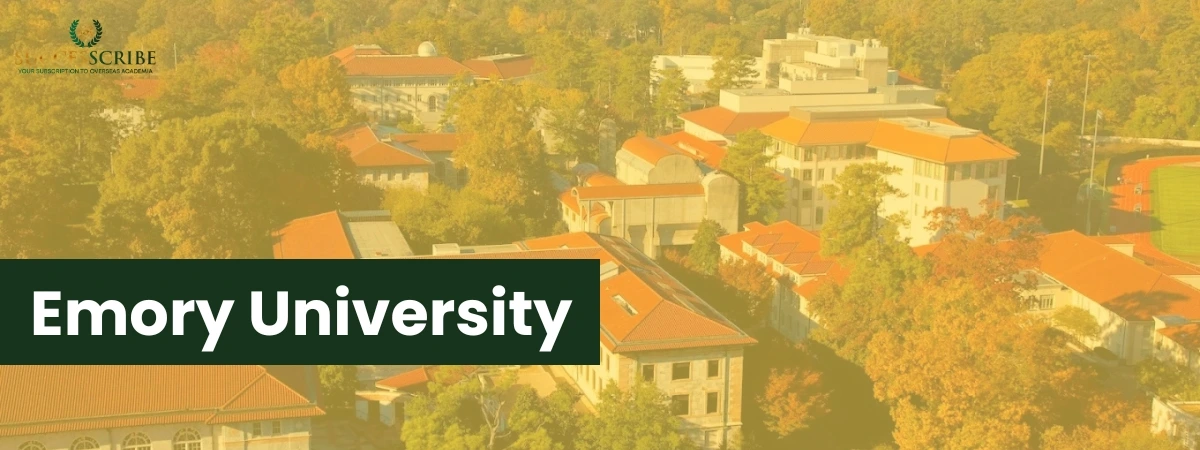
Many people know Emory University as one of America’s leading research institutions, a name consistently found among the nation’s top-ranked schools. But beyond the impressive numbers and academic prestige lies a far more compelling story – one filled with quirky traditions, a complex history, and world-changing impact. The true character of Emory is found in its deep connections to global corporations, public health, and pivotal moments in American history. Here are six of the most fascinating and unexpected facts that define this remarkable institution. Today, Emory is renowned for strong programs in health sciences, business, public health, arts & sciences, and law, while maintaining a robust liberal arts foundation. It is also a member of the Association of American Universities (AAU) – a mark of research distinction.
Key Highlights: Emory University
- Why called Coca-Cola University?
- History and Evolution: Emory University
- Acceptance Rate and Admissions Competitiveness
- Ranking and Reputation: A Consistent Presence Among Elites
- Academic Structure of Emory University: A Constellation of Schools
- Top Programs & Academic Excellence: Emory University
- Admission Requirements at Emory University
- Cost of Studying and Financial Aid at Emory University: Investment and Accessibility
- Career Outcomes and Placement
- Notable Alumni and Faculty: Emory University
- Conclusion
- FAQs
Want to Study in Europe?
Start your journey with Successcribe’s free expert guidance
Book a Free Session NowIt’s nicknamed “Coca-Cola University” for a very good reason.
Emory’s nickname, “Coca-Cola University,” isn’t just a clever moniker; it’s a testament to a financial partnership that fundamentally reshaped the institution’s destiny. While the university has received generous support from Coca-Cola-related families like the Candlers and Goizuetas for over a century, one gift in particular catapulted Emory onto the national stage. In November 1979, brothers Robert and George Woodruff donated $105 million worth of Coca-Cola stock to the university. At the time, it was the largest single gift ever made to an institution of higher education in United States history. This singular act of generosity provided the fuel for Emory’s transformation from a strong regional university to a globally recognized research powerhouse. The financial foundation built by this historic donation enabled Emory to attract the world’s greatest minds, creating the kind of faculty that defines a world-class university.
History and Evolution: Emory University

Founded in 1836 by the Methodist Episcopal Church in the small town of Oxford, Georgia, Emory College was named after John Emory, a popular Methodist bishop. The university’s journey is one of resilience and transformation.
- The Early Years: After surviving the devastation of the Civil War, which forced a temporary closure, the college was revived through significant philanthropy, most notably from George I. Seney.
- The Atlanta Move (1915): A pivotal moment in Emory’s history occurred in 1915 when Asa Griggs Candler, founder of The Coca-Cola Company, donated land in Atlanta’s Druid Hills and a $1 million endowment to move the college and recharter it as a university. This established the “Coca-Cola University” nickname that persisted for decades.
- Modern Era: In 1979, the university received the largest single gift to an educational institution at the time – $105 million in Coca-Cola stock from Robert and George Woodruff – catapulting Emory into the top tier of American research universities.
Today, Emory operates two distinct undergraduate campuses: Emory College (Atlanta) and Oxford College (the original historic site), offering students diverse environments to begin their four-year journey.
Acceptance Rate and Admissions Competitiveness
Emory’s admissions statistics confirm its position as a highly selective national university. These figures offer a quantitative snapshot of the competitive nature of its applicant pool and the exceptional academic profile of its admitted students. The university’s low acceptance rates underscore a rigorous selection process that seeks to identify the most promising scholars and leaders from around the world.
| Metric | Statistic |
| Overall Admission Rate | 10.6% |
| Regular Decision Admission Rate | 9% |
| Total Applications | 33,517 |
| Oxford College Acceptance Rate | 13.35% |
| Early Decision (ED1) Acceptance Rate | 31% |
| SAT Score (Middle 50%) | 1490–1560 (varies by year) |
| ACT Composite (Middle 50%) | 33–35 |
| Yield (Enrollment Rate) | 40% |
Pro-Tip for Students: Emory offers two Early Decision rounds (ED I and ED II). Applying through ED significantly increases your statistical chances of admission if Emory is your top choice.
Ranking and Reputation: A Consistent Presence Among Elites
Emory University’s rankings serve as a key indicator of its academic quality, research impact, and global standing. Its consistent placement among the top universities in the United States and the world reflects a deep commitment to excellence across its undergraduate, graduate, and professional schools. This reputation is further solidified by its inclusion in lists like Newsweek’s “25 New Ivies” and Forbes’ “20 New Ivies,” which recognize institutions that have achieved a level of academic and social prestige comparable to the traditional Ivy League.
| Ranking Body | National | Global |
| U.S. News & World Report | #24 | #69 |
| Times Higher Education | #24 | #102 |
| ARWU | #101-150 | |
| Best Value Schools (U.S. News) | #22 | – |
| School of Nursing (Masters) | #1 in the Nation | – |
| Rollins School of Public Health | #2 in the Nation | – |
| Goizueta Business School (BBA) | #14 in the Nation | – |
| QS World University Rankings | #182 | |
| The Wall Street Journal / College Pulse | #17 | – |
| Forbes | #31 | – |
| Washington Monthly | #55 | – |
Apply to Top European Universities
Make your application simple and stress-free with Successcribe
Get Expert Help NowAcademic Structure of Emory University: A Constellation of Schools

Emory University’s academic landscape is a dynamic constellation of nine distinct schools and colleges, each with its own history and specialized focus. This structure allows the university to offer a comprehensive range of programs, from the liberal arts and sciences to advanced professional and doctoral studies, all contributing to a shared mission of education and research.
Emory University Schools and Colleges
| School/College | Year Founded |
| Emory College of Arts and Sciences | 1836 |
| Oxford College | 1836 |
| Emory University School of Medicine | 1854 |
| Nell Hodgson Woodruff School of Nursing | 1905 |
| Candler School of Theology | 1914 |
| Emory University School of Law | 1916 |
| Laney Graduate School | 1919 |
| Goizueta Business School | 1919 |
| Rollins School of Public Health | 1990 |
A hallmark of Emory’s undergraduate education is its unique two-part experience. Students can begin their journey at Oxford College, located on the university’s original historic campus. There, they pursue a rigorous liberal arts curriculum and earn an associate degree in an intimate, small-college setting before automatically transitioning to the Atlanta campus to complete their bachelor’s degree at Emory College of Arts and Sciences.
Emory University also offers innovative dual-degree programs, including a five-year engineering track in collaboration with the Georgia Institute of Technology and a dual master’s in social work with the University of Georgia, expanding opportunities for interdisciplinary study.
Top Programs & Academic Excellence: Emory University
While strong across disciplines, Emory University boasts several programs that are nationally and globally recognized as leaders.
Most Popular Undergraduate Majors
Based on degrees conferred, Emory’s most popular undergraduate fields include:
- Business Administration and Management (19.6% of degrees)
- Finance, Marketing, Strategy and Management Consulting concentrations
- 96% employment rate within 3 months
- Median starting salary: $72,076
- Biological Sciences (15.4% of degrees)
- Neuroscience, Biology, Biochemistry
- Strong pre-medical preparation (high medical school acceptance rates)
- Average salary: $21,497 (early career, often pursuing graduate/medical school)
- Social Sciences (14.2% of degrees)
- Political Science, Psychology, Sociology, Economics
- Median salary for Psychology: varies by career path
- Economics graduates: Strong placement in consulting and finance
- Health Professions and Related Programs
- Nursing (BSN): Median salary $64,577
- Public Health
- Pre-professional health tracks
- Computer and Information Sciences
- Computer Science: Highest early career earnings at $73,250
- Rapidly growing program with strong industry connections
Strongest Graduate and Professional Programs
- Medicine and Health Sciences:
- Emory School of Medicine ranks among top medical schools for research (#12 NIH funding)
- Primary Care programs highly regarded
- Physician Assistant Studies, Physical Therapy programs nationally recognized
- Public Health:
Rollins School of Public Health (#2 nationally) offers expertise in:
- Epidemiology
- Global Health
- Biostatistics and Bioinformatics
- Health Policy and Management
- Environmental Health
- Business:
- Goizueta MBA graduates achieve 96% employment within 3 months
- Median MBA salary: $165,000
- Top employment sectors: Consulting (highest salaries $175,000), Financial Services, Technology, Healthcare
- Law:
- Strong programs in corporate law, intellectual property, health law
- Emphasis on public interest law and social justice
Admission Requirements at Emory University

Applying to a “New Ivy” like Emory requires a strategic approach. Emory utilizes a Holistic Review Process, meaning the admission committee doesn’t just look at numbers – they look for “Global Thinkers” who will actively contribute to the campus community.
Key Application Deadlines
| Decision Plan | Application Deadline | Decision Notification |
| Early Decision I (Binding) | November 1 | Mid-December |
| Emory Scholars Program | November 15 | Mid-February |
| Early Decision II (Binding) | January 1 | mid-February |
| Regular Decision | January 1 | Late March |
The Core Requirements
- Application Portal: Common Application.
- Standardized Testing: Test-Optional for 2025-2026. You are not required to submit SAT or ACT scores. If you choose to submit them, Emory will superscore (taking your highest section scores across multiple sittings).
- High School Transcript: Emphasis is placed on the rigor of your curriculum (AP, IB, Honors) and a sustained high GPA (typically 3.80–4.0 unweighted).
- Letters of Recommendation: One from a School Counselor.
- Two from core academic teachers (Math, Science, English, Social Studies, or Foreign Language).
- The Emory Writing Supplement: Beyond the Common App personal statement, Emory requires short-answer responses. For 2026, focus on your academic interests and a community you have impacted.
Graduate & Professional Admissions
Each graduate school at Emory (Laney, Goizueta, Rollins, etc.) has its own specific criteria, but the general baseline for 2026 entry remains consistent.
Academic & Professional Prerequisites
- Transcripts: A Bachelor’s degree from an accredited institution. A GPA of 3.5+ is considered highly competitive for most PhD and Master’s programs.
- Standardized Tests: Laney Graduate School: Many programs are now GRE-optional; check your specific department.
- Goizueta Business School: Requires GMAT or GRE (Waivers available for qualified candidates).
- School of Law: Requires LSAT or GRE.
- School of Medicine: Requires MCAT.
- Statement of Purpose (SoP): This is critical. It should detail your research interests, career goals, and why Emory’s specific faculty/resources are the right fit for your trajectory.
- Resume/CV: Highlighting research, publications, internships, or relevant work experience.
International Student Requirements
Emory is home to students from over 100 countries. International applicants follow the same deadlines but have a few extra steps:
- English Proficiency: If English is not your first language, you must submit scores from:
- TOEFL: 100+ (iBT)
- IELTS: 7.5+
- Financial Certification: After admission, international students must provide documentation for the I-20 form to secure an F-1 student visa.
- Credential Evaluation: While not always required for undergrads, many graduate programs require a WES or ECE evaluation of international transcripts.
What Makes a “Standout” Applicant?
To rank in the top 10–15% of the applicant pool, you should demonstrate:
- Intellectual Curiosity: Going beyond the classroom (e.g., independent research, summer intensives).
- Service to Humanity: Consistent involvement in community service or social activism.
- Authentic Voice: Essays that reveal your personality, resilience, and unique perspective rather than just listing achievements.
Tips for Competitive Applications
Based on admissions data and statements from Dean of Admission John Latting:
- Demonstrate Intellectual Curiosity: Essays should show genuine passion for learning, not just achievements
- Take Academic Risks: Challenge yourself with the most rigorous courses available
- Show Authentic Engagement: Depth matters more than breadth in extracurriculars
- Connect to Atlanta: Mention specific ways you’ll engage with the city’s resources (CDC, Fortune 500 companies, civil rights history, cultural scene)
- Demonstrate Fit: Articulate why Emory’s specific programs, values, and opportunities align with your goals
- Consider Early Decision I: 31% acceptance rate vs. 8% Regular Decision provides significant advantage
- Apply to Both Campuses: If interested in both Emory College and Oxford College, applying to both can increase admission chances.
Cost of Studying and Financial Aid at Emory University: Investment and Accessibility
Emory is committed to affordability through its Emory Advantage program. Starting in Fall 2026, a major new initiative ensures that families earning $200,000 or less will pay no tuition at Emory.
Total Cost of Attendance (COA)
The “sticker price” includes more than just tuition. It covers housing, dining, books, and personal expenses. For the 2025-26 cycle, tuition increased by approximately 5.8% to reflect the university’s expanding resources and faculty investments.
| Expense Category | Undergraduate (Atlanta/Oxford) | Graduate (Estimated Average) |
| Tuition | $67,080 | $49,800 – $65,000 |
| Mandatory Fees | $976 | $1,200 |
| Housing (On-Campus) | $11,500 | $14,000 (Off-campus est.) |
| Food/Meal Plan | $9,744 | $6,500 |
| Books & Supplies | $1,274 | $1,500 |
| Personal & Travel | $2,690 | $3,000 |
| Total Estimated COA | $93,264 | $76,000 – $91,200 |
Average Graduate Tuition (Per Year)
| School / Program | Estimated Annual Tuition |
| Graduate School of Arts & Sciences | $48,750+ |
| Goizueta Business School (MBA) | $70,000+ |
| School of Law (JD) | $64,000+ |
| Rollins School of Public Health | $50,000+ |
| School of Nursing | $45,000 – $60,000 |
The “Emory Advantage Plus” Revolution
The most critical update for 2026 is the expansion of the Emory Advantage program. Emory is now aggressively removing the “sticker shock” for middle and low-income families.
- The $200k Promise (NEW for 2026): Starting in the Fall 2026 term, Emory has pledged that domestic undergraduate families with a total income of $200,000 or less (with typical assets) will pay $0 in tuition.
- No-Loan Policy: For all domestic students who qualify for need-based aid, Emory replaces all federal and private loans with institutional grants. This means you can graduate with a world-class degree and zero debt to the university.
- 100% Need Met: Emory remains one of a few dozen schools in the U.S. that meets 100% of a domestic student’s demonstrated financial need as calculated by the FAFSA and CSS Profile.
Merit-Based Scholarships (The Emory Scholars Program)
If you have an exceptional academic and leadership profile, you may be considered for merit aid regardless of your family’s income. You must apply by November 15 to be considered.
- Robert W. Woodruff Scholarship: The most prestigious award, covering full tuition, fees, and on-campus room and board.
- George W. Jenkins Scholarship: Geared toward students who have overcome significant adversity and shown a commitment to community service.
- Dean’s Achievement Scholarship: A $10,000 annual award given to high-achieving sophomores to support their remaining three years.
Financial Aid for International Students
Unlike many U.S. universities, Emory does offer need-based financial aid to international applicants, though it is highly competitive.
- Need-Aware Admissions: For international students, requesting financial aid is taken into account during the admissions decision.
- Application Requirements: International students must submit the CSS Profile and the International Student Certification of Finances.
- Merit Eligibility: All international applicants are automatically considered for the Emory University Scholar Programs if they meet the November 15 deadline.
Graduate Funding & Assistantships
- PhD Students: Most PhD candidates at the Laney Graduate School receive a full tuition waiver plus a competitive annual stipend (approx. $37,000–$40,000) in exchange for research or teaching assistantships.
- Professional Schools: Goizueta Business School and Rollins School of Public Health offer specific fellowships (e.g., the Paul D. Coverdell Fellows for Peace Corps volunteers).
Career Outcomes and Placement
Emory University’s career outcomes are a testament to its academic rigor, global reputation, and robust alumni network. Graduates from Emory are highly sought after by top employers, graduate schools, and research institutions worldwide. According to data from Emory Career and Professional Development (CPD), approximately 98% of 2025 Emory College graduates were working, studying, or volunteering within six months of graduation.
- 53% secured full-time employment
- 38% continuing their education (graduate/professional school)
- 7% part-time work
- 1% volunteering (Peace Corps, AmeriCorps, etc.)
Average Starting Salaries by Major
Emory graduates command competitive salaries across industries, with STEM, business, and healthcare fields leading in earnings:
| Major/Program | Average Starting Salary (USD) | Top Industries/ Hiring Sectors |
| Computer Science | $73,250 | Tech (Google, Microsoft, Amazon), Finance, Consulting |
| Business Administration (BBA) | $70,000 | Consulting (McKinsey, BCG), Finance (Goldman Sachs), Marketing |
| Nursing (BSN) | $68,000 | Healthcare (Emory Healthcare, Mayo Clinic), Public Health |
| Biology/Biochemistry | $60,000 | Biotech (Genentech, Pfizer), Research, Healthcare |
| Public Health (MPH/MSPH) | $58,000 | NGOs (WHO, CDC), Government, Healthcare Administration |
| Economics | $65,000 | Finance, Consulting, Public Policy |
| Engineering | $67,000 | Tech, Manufacturing, Energy |
| Law (JD) | $180,000 | Law Firms, Corporate Legal, Public Interest |
| MBA (Goizueta) | $150,000+ | Consulting, Finance, Tech Management |
The return on investment (ROI) for an Emory degree continues to climb. Median starting salaries for the Class of 2025 have seen a 3.2% year-over-year increase.
Pre-Professional Success Rates
Emory is widely considered one of the best “pre-professional” schools in the nation, particularly for students aiming for Medicine or Law.
- Pre-Health/Medical School Placement
While the national acceptance rate for medical school hovers around 45%, Emory applicants boast a 65% acceptance rate.
- The “Power Move”: For students with a GPA of 3.7+ and an MCAT of 510+, the acceptance rate jumps to a staggering 85%.
- Pre-Law Placement
Emory’s pre-law advising helps secure placements at “T14” (Top 14) law schools.
- Top destinations for Emory grads include Harvard Law, Yale Law, Columbia, and Emory Law.
Strategic Career Support: The “Pathways” Advantage
Emory doesn’t leave your career to chance. The Student Flourishing Initiative (2025-26) includes:
- Career Communities: Students join industry-specific clusters (e.g., “Health & Life Sciences” or “Creative Arts & Media”) to receive tailored networking opportunities.
- Alumni Mentorship: The Emory Connects platform links students directly with over 160,000 alumni worldwide for “coffee chats” and referral opportunities.
- Handshake at Emory: A dedicated job portal that hosts over 25,000+ active job postings specifically targeting Emory talent.
Notable Alumni and Faculty: Emory University

The caliber of Emory University’s global network is exemplified by the remarkable achievements of its alumni and faculty. This distinguished community includes Nobel laureates, heads of state, Pulitzer Prize winners, and pioneers in business, science, and the arts, all of whom demonstrate the profound real-world impact of an Emory education.
Prominent Emory Graduates
The following table highlights a small selection of the university’s influential alumni.
| Name | Graduating Class | Notable Achievement |
| Alben Barkley | BA 1900 | 35th Vice President of the United States |
| Bobby Jones | Law 1929 | Founder of the Masters Golf Tournament |
| Newt Gingrich | BA 1965 | 50th Speaker of the U.S. House of Representatives |
| Kenneth Cole | BA 1976 | Founder of Kenneth Cole Productions |
| Peter Buck | (Attended) | Guitarist for the band R.E.M. |
| Bernice King | JD 1990 | Minister, activist, and CEO of The King Center |
| Fala Chen | 2005C | Chinese American actress |
| Elizabeth Prelogar | BA 2002 | 48th Solicitor General of the United States |
Emory’s faculty is equally distinguished, comprising world-renowned scholars and public figures. This includes figures from global politics and human rights like 39th U.S. President Jimmy Carter and Nobel Peace Prize laureate Desmond Tutu; literary giants such as Booker Prize-winning novelist Sir Salman Rushdie and U.S. Poet Laureate Natasha Trethewey; and leaders in medicine and public health, including CNN chief medical correspondent Dr. Sanjay Gupta. Their presence on campus enriches the academic environment and provides students with unparalleled learning opportunities.
Conclusion
For the prospective student, Emory University offers a compelling and distinct value proposition. It strikes an uncommon balance between the personalized, inquiry-driven focus of a liberal arts college and the vast resources and opportunities of an elite research institution. Situated in the dynamic and growing city of Atlanta, Emory provides a vibrant setting for academic and personal growth, enriched by deep connections to global partners in health, business, and public service. The university’s profound commitment to financial accessibility, headlined by the Emory Advantage Plus program, ensures that talented students from all economic backgrounds can join its community. Upon graduation, they become part of a powerful and accomplished global network of alumni and faculty who are shaping the future. Ultimately, Emory is a place for those who seek to contribute to positive transformation in the world through courageous inquiry, collaborative discovery, and compassionate leadership.
FAQs
What is the real difference between Emory College and Oxford College?
1. Think of Emory College (Atlanta) as a “Big City” experience with 6,000+ students and immediate access to Fortune 500 companies.
2. Think of Oxford College (Oxford, GA) as a “Close-knit Leadership” experience with only 1,000 students. At Oxford, first-year students are the campus leaders (since there are no juniors/seniors). Both lead to the same Emory degree, and Oxford students move to the Atlanta campus automatically after their sophomore year
How does Emory help me get a job at the CDC?
Emory is located right next to the CDC headquarters. Through the “Rollins Earn and Learn” (REAL) program and the Pathways Center, students have exclusive access to internships, research projects, and networking events that are not available at any other university.
Is it true that I can attend Emory for free?
Yes, for many! Starting in Fall 2026, under the Emory Advantage Plus program, domestic families earning $200,000 or less with typical assets will have their full tuition covered.
How competitive is admission to Emory University?
Admission to Emory University is highly competitive. For the 2025–26 cycle, the overall acceptance rate is around 9–11%, making Emory one of the most selective private universities in the United States. Successful applicants typically demonstrate strong academics, leadership, and well-rounded extracurricular involvement.
Is Emory University an Ivy League school?
No, Emory University is not part of the Ivy League, which is a specific athletic conference in the northeastern U.S. However, Emory is widely regarded as an “Ivy-plus” university due to its academic rigor, elite faculty, research output, and highly selective admissions.
Related Post
California Institute of Technology
University of California, Los Angeles
Harvard University
Harvard University fees in Indian rupees