

Despite rising tuition and living costs, an MBA remains a powerful lever for role, industry and geographic switches – but the payoff is far from automatic. In 2025 the UK labour market shows steady wage growth (median full-time salary up 4.3% to £39,039) while minimum-wage increases have compressed early-career differentials; that makes course choice, school…

An MBA has always been a gateway to higher salaries, global careers, and leadership roles – but in 2026, the real question isn’t whether an MBA pays, it’s which specialization pays the most. As the global business landscape evolves faster than ever, employers are increasingly looking beyond generic MBAs. They’re hiring professionals with targeted expertise…
If you’re thinking about an MBA and money matters (it usually does), one of the most important questions is: where will that degree pay best? Around the world, business schools in major economies are producing graduates who command six-figure salaries and global career opportunities. In 2026, the top countries for highest MBA salaries continue to…
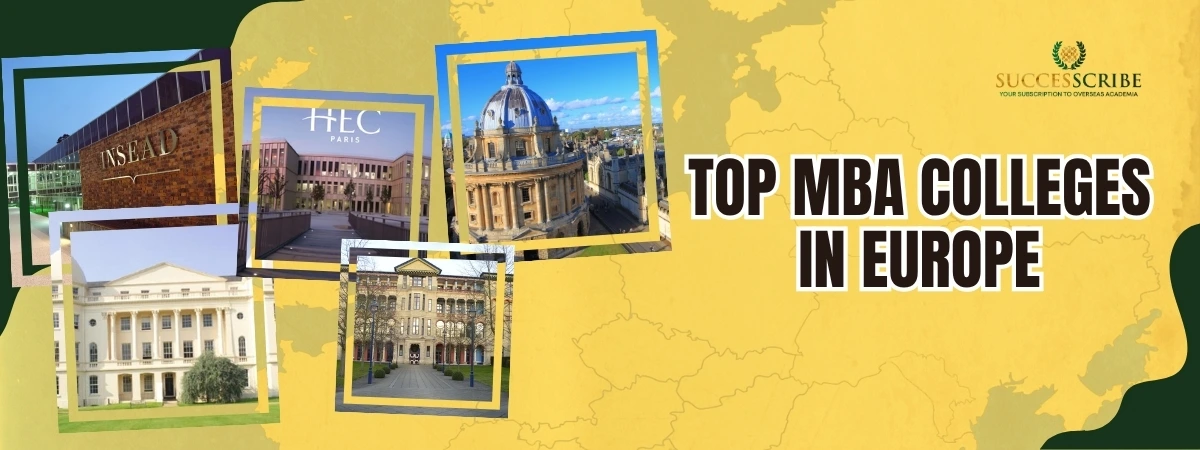
Europe has long been a global leader in management education, attracting thousands of ambitious professionals from across the world every year. From the bustling financial hubs of London and Paris to the innovation-driven economies of Germany, Switzerland, and the Netherlands, Europe offers a diverse and world-class environment for pursuing an MBA. What makes the European…
Higher education institutions have been pillars of human civilization for over a millennium, shaping societies, advancing knowledge, and producing generations of scholars, leaders, and innovators. The oldest universities in the world represent not just ancient buildings and traditions, but living testaments to humanity’s enduring quest for knowledge and understanding. What makes these institutions remarkable is…

Every year, millions of students and professionals around the world prepare for some of the toughest exams in the world, which test not only intelligence but also endurance and emotional strength. These exams are not just tests of knowledge but of endurance, mental strength, analytical ability, and emotional resilience. They define academic excellence, professional capability,…

Across the world, some university degrees are widely considered more demanding than others – not just because of long hours or dense theory, but because they combine high intellectual complexity, steep practical skill requirements, intense assessment regimes, long durations, and in many cases, high-stakes professional consequences (for example, a surgeon’s exam failure affects patient safety)….
When most people think of a Master’s degree in Germany, they assume a duration of 18 to 24 months (1.5–2 years). Indeed, the typical model at many German public universities is two years (4 semesters) comprising 120 ECTS. However, in recent years there has been growing interest in accelerated or “fast-track” master’s programmes of 12…

Germany is an academic powerhouse globally recognized for offering free or affordable, high-quality education and for producing graduates who drive global progress in engineering, technology, business, and life sciences. For international students, choosing the best courses to study in Germany is paramount to securing academic excellence, global employability, and long-term personal growth. As of 2025,…
The dream of studying abroad often comes with a crucial question: Is the destination safe? For the rapidly growing cohort of Indian students choosing Germany – attracted by world-class, often tuition-free education and strong career prospects – this concern about safety is paramount. When planning higher education abroad, the first question often asked by Indian…